Taj and Tigers: Golden Triangle with Ranthambore
Last updated:
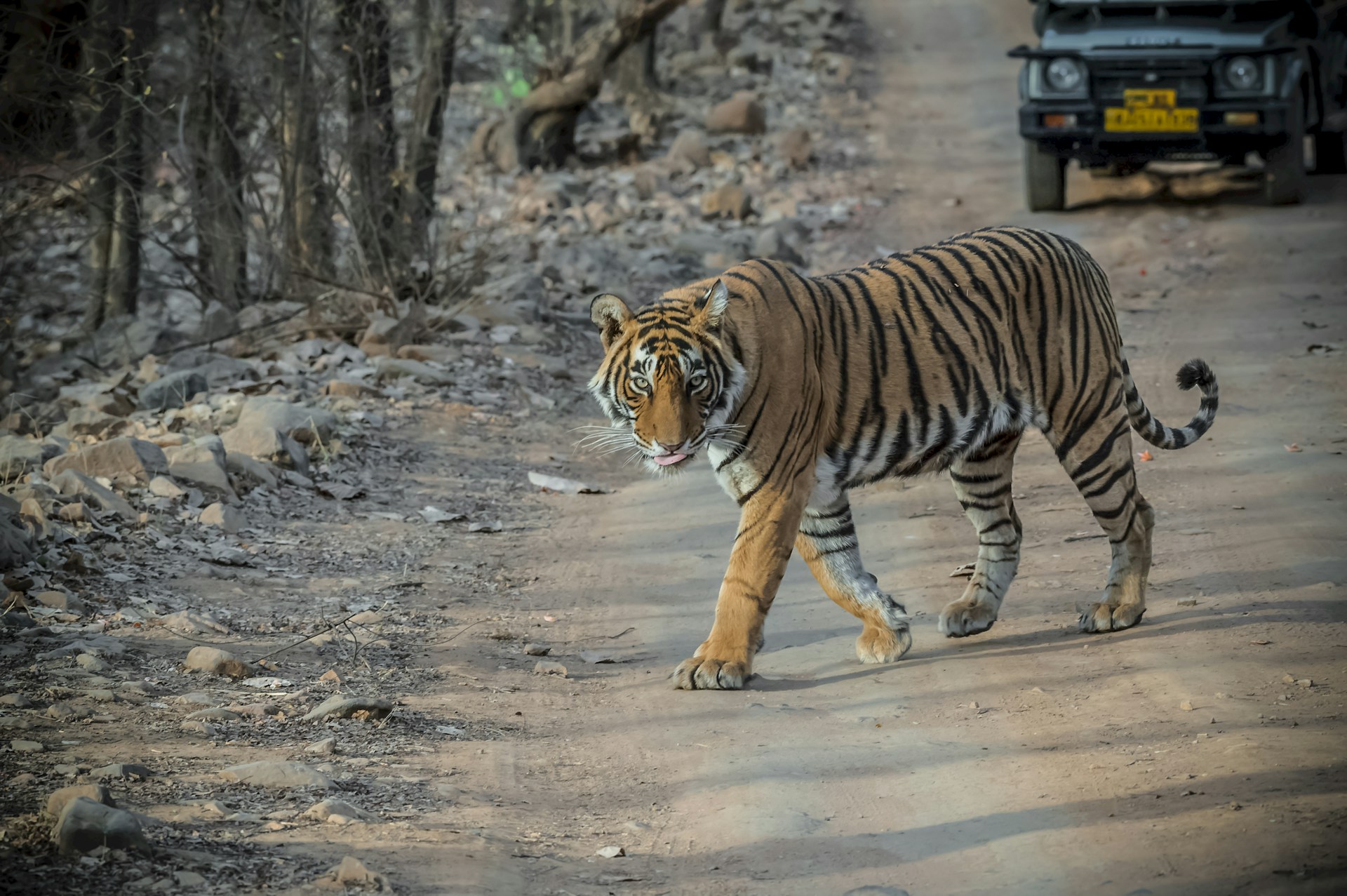
Ranthambore is the best extension to any Golden Triangle trip. It is 3.5 hours from Jaipur, adds one or two nights, and gives you a genuine chance of seeing a wild Bengal tiger. The park has one of the highest tiger densities in India and the cats here are famously relaxed around safari vehicles. Add a 1,300-year-old fort rising from the jungle and you have something the Golden Triangle on its own cannot offer.
At a glance
| Factor | GT only (5–6 days) | GT + Ranthambore (7–9 days) |
|---|---|---|
| Cities | Delhi, Agra, Jaipur | Delhi, Agra, Jaipur + Ranthambore |
| Experience | Mughal architecture, forts, markets, street food | All of the above + tiger safari, wildlife, jungle fort |
| Extra travel | — | 3.5 hours Jaipur → Ranthambore by road |
| Extra nights | — | 1–2 nights in Sawai Madhopur |
| Safaris | — | 2 (one night) or 4 (two nights) |
| Best for | Culture, history, food | All of the above + wildlife, photography, once-in-a-lifetime sighting |
Why Ranthambore
India has over 50 tiger reserves. Ranthambore stands out for three reasons.
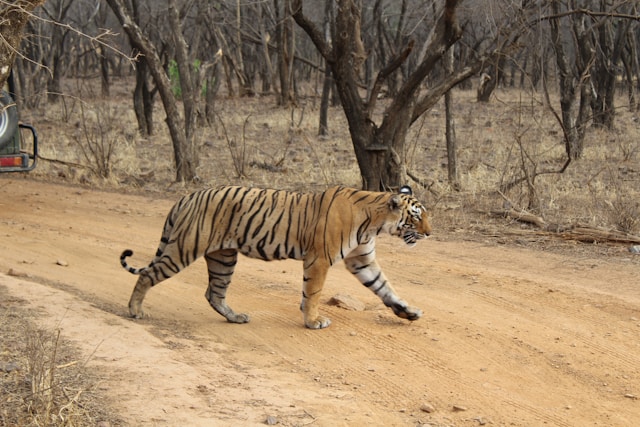
The tigers are visible. Ranthambore's tigers are habituated to vehicles. Unlike reserves where you might hear a tiger but never see one, here the cats walk along tracks, drink at lakesides in full view, and sometimes sit on the road in front of your jeep. The park has around 70–80 tigers across 1,334 square kilometres.
The setting is extraordinary. Ranthambore Fort, a UNESCO World Heritage Site, rises from the jungle canopy. The park's landscape mixes dry deciduous forest, lakes, and open grassland. You see tigers against the backdrop of crumbling temple walls and banyan-draped ruins — nothing like the dense jungle of other reserves.
The logistics are simple. Ranthambore is just 3.5 hours from Jaipur by road. It sits naturally at the end of the Golden Triangle route, after Jaipur and before the return to Delhi. No internal flights needed.
Tiger population: NTCA All India Tiger Estimation. Park area: Rajasthan Forest Department.
Getting there
Ranthambore National Park is near the town of Sawai Madhopur, 180 km southeast of Jaipur.
- By road from Jaipur
- 3–3.5 hours by private car. The most common option and the one that fits naturally into a Golden Triangle itinerary. Your driver drops you at the hotel, and you do your first safari that afternoon.
- By train from Jaipur
- Sawai Madhopur station is on the Delhi–Mumbai main line. Multiple trains from Jaipur take 2–2.5 hours. Also useful for the return — you can train directly from Sawai Madhopur to Delhi (5–6 hours) instead of driving back via Jaipur.
- By road from Agra
- 280 km, roughly 5–6 hours. Possible but less common. Most itineraries go Agra → Jaipur → Ranthambore rather than Agra → Ranthambore directly.
Distances: Google Maps. Train times: Indian Railways timetable.
Safari zones and booking
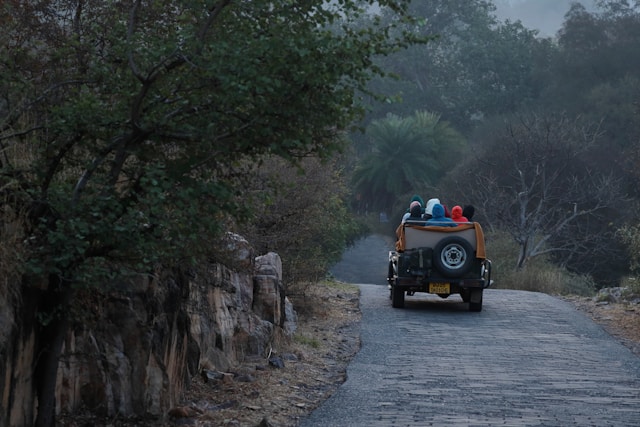
Ranthambore has 10 tourism zones. Zones 1–5 are the core area with the highest tiger density. Zones 6–10 are buffer zones — still good for wildlife but fewer tiger sightings.
- Best zones for tigers
- Zones 3, 4, and 5. Zone 3 includes the Ranthambore Fort and Padam Talao lake — one of the most photographed tiger locations in India. Zone 6 is also productive and less crowded.
- Gypsy vs canter
- A gypsy is an open-top 6-seater jeep. A canter is a 20-seater open bus. Gypsies go deeper into the park, are quieter, and offer far better sighting opportunities. Always choose a gypsy if available.
- Safari timings
- Morning safari: 6:00 am to 9:30 am. Afternoon safari: 2:00 pm to 5:30 pm. Each drive is roughly 3.5 hours. Morning drives have the best light and tiger activity.
- Booking
- The official booking window opens 120 days in advance. Popular zones in peak season (October to March) sell out within days. Book the moment the window opens, or use a tour operator who manages permits for you. Zone allocation is officially random on the government portal, though a local operator can sometimes help with preferences.
Safari costs
| Vehicle | Indian nationals | Foreign nationals |
|---|---|---|
| Gypsy (6-seater jeep) | &rupee;2,000 (approx GBP 19) | &rupee;4,200 (approx GBP 40) |
| Canter (20-seater bus) | &rupee;1,400 (approx GBP 13) | &rupee;3,500 (approx GBP 33) |
These are government permit prices per person per safari. With two safaris over one night, a foreign visitor on a gypsy pays around GBP 80 in safari permits. Hotels in Sawai Madhopur range from GBP 30–50 for a comfortable lodge to GBP 150–300 for a luxury wildlife resort.
Safari prices: Ranthambore National Park official tariff, 2025–26 season. GBP conversions approximate at current rates.
When to go
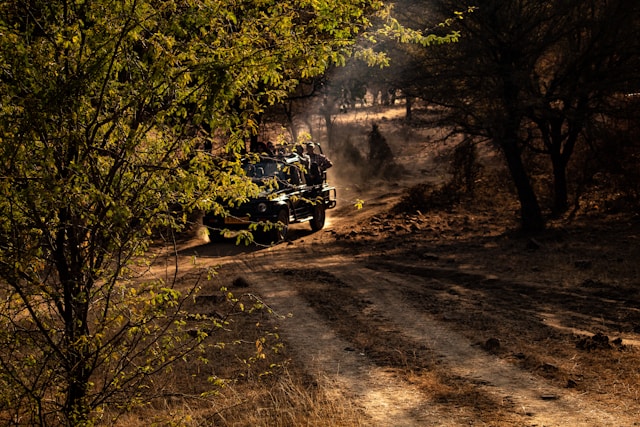
The park is open October to June and closed during monsoon (July to September).
- October to March (best for comfort)
- Daytime temperatures of 15–30°C. The most pleasant weather for safaris. This is peak season — book zones well in advance. Morning drives are cold (bring layers).
- April to June (best for tiger sightings)
- Temperatures above 40°C. Uncomfortable, but tiger sighting rates are highest because the dry vegetation thins out and tigers come to waterholes more frequently. Fewer tourists, easier zone availability.
If your Golden Triangle trip is between October and March, adding Ranthambore is straightforward. If you are visiting in monsoon, the park is closed and this extension does not work.
How many nights
- One night (2 safaris)
- The minimum. Arrive from Jaipur by early afternoon, do the afternoon safari (2:00–5:30 pm), stay overnight, do the morning safari (6:00–9:30 am), then drive to Delhi or back to Jaipur. Most visitors see at least one tiger with two drives. This turns a 5-day Golden Triangle into 7 days.
- Two nights (4 safaris)
- The comfortable option. Four safaris across different zones significantly increase your chances of a close tiger encounter. You also have time to visit Ranthambore Fort (the hilltop walk takes 2–3 hours) and explore Sawai Madhopur town. This turns a 5-day Golden Triangle into 8–9 days.
We recommend two nights if your schedule allows. The difference between two safaris and four is substantial — you see different zones, different light conditions, and the animals behave differently at dawn versus afternoon.
Sample itineraries
7 days: Golden Triangle + 1 night Ranthambore
- Day 1: Arrive Delhi. Afternoon in New Delhi — Humayun's Tomb, India Gate.
- Day 2: Old Delhi. Red Fort, Jama Masjid, Chandni Chowk, spice market.
- Day 3: Delhi → Agra. Gatimaan Express (1 hr 40 min). Taj Mahal afternoon.
- Day 4: Agra → Jaipur. Agra Fort morning. Fatehpur Sikri stop en route. Arrive Jaipur evening.
- Day 5: Jaipur. Amber Fort, City Palace, Hawa Mahal, Jantar Mantar.
- Day 6: Jaipur → Ranthambore. Morning drive (3.5 hrs). Afternoon safari (2:00–5:30 pm).
- Day 7: Ranthambore → Delhi. Morning safari (6:00–9:30 am). Drive to Delhi (6 hrs) or train from Sawai Madhopur (5–6 hrs). Depart.
9 days: Golden Triangle + 2 nights Ranthambore
- Day 1: Arrive Delhi. Settle in, evening walk.
- Day 2: Delhi. Old Delhi morning, New Delhi afternoon.
- Day 3: Delhi → Agra. Gatimaan Express. Taj Mahal afternoon.
- Day 4: Agra → Jaipur. Agra Fort morning. Fatehpur Sikri en route. Arrive Jaipur evening.
- Day 5: Jaipur. Full day: Amber Fort, City Palace, bazaars.
- Day 6: Jaipur → Ranthambore. Morning drive. Afternoon safari.
- Day 7: Ranthambore. Morning safari. Ranthambore Fort walk (afternoon). Evening at leisure.
- Day 8: Ranthambore. Morning safari. Afternoon safari. Final night.
- Day 9: Ranthambore → Delhi. Morning drive or train. Depart.
Both itineraries slot Ranthambore after Jaipur, which is the natural routing. The return to Delhi from Sawai Madhopur avoids doubling back through Jaipur.
Common questions
Can you do Ranthambore as a day trip from Jaipur?
Technically yes, but it is not worth it. The drive is 3.5 hours each way, and safaris run at dawn and mid-afternoon. A day trip means one safari sandwiched between 7 hours of driving. One night gives you two safaris (afternoon and next morning) and is the minimum we recommend.
What are the chances of seeing a tiger in Ranthambore?
Ranthambore has some of the best tiger-sighting odds in India. The park has around 70–80 tigers across 10 zones, and the cats here are famously relaxed around vehicles. With two safaris over one night, most visitors see at least one tiger. Four safaris over two nights makes a sighting very likely, though never guaranteed.
Which safari zone is best in Ranthambore?
Zones 3, 4, and 5 have the highest tiger density and are the most popular. Zone 3 includes the Ranthambore Fort and Padam Talao lake. Zone 6 is also good and less crowded. You cannot choose your zone when booking through the official portal — it is assigned randomly, though a local operator can sometimes help with zone preferences.
Is Ranthambore open in summer?
Yes, from October to June. The park closes during monsoon (July to September). Summer months (April to June) are hot — over 40°C — but tiger sighting rates are actually highest because tigers come to waterholes more frequently and the dry vegetation makes them easier to spot.
How far in advance should I book a Ranthambore safari?
Book as early as possible. The official booking window opens 120 days in advance. Popular zones (3, 4, 5) in peak season (October to March) sell out within days of opening. If you are visiting in peak season, book the moment the window opens or use an operator who manages this for you.
Want to add Ranthambore?
We build private Golden Triangle itineraries with Ranthambore included — safaris, permits, and hotels arranged for you.
GET IN TOUCH