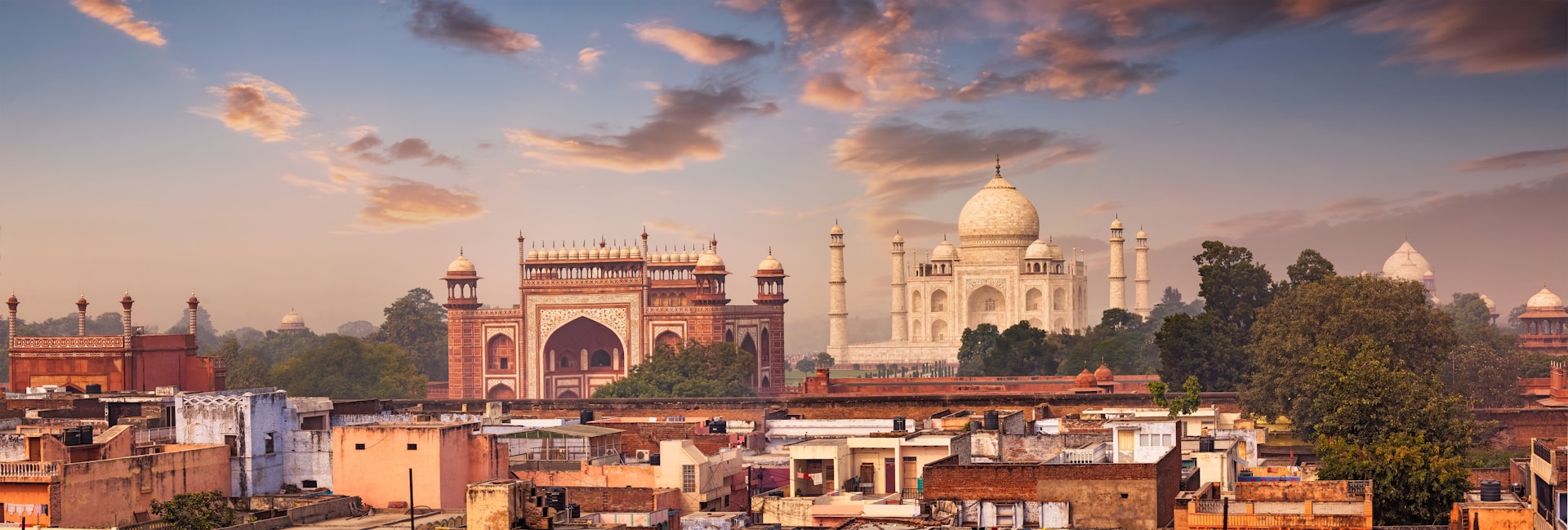
How Many Days for the Golden Triangle?
Last updated:
Five days is the realistic minimum. Six is comfortable. Seven lets you actually enjoy it. The three cities are 230–280 km apart, connected by roads that take 3–5 hours each. At four days you are driving more than sightseeing. At seven you have time to wander Old Delhi's lanes, watch sunrise at the Taj Mahal without rushing to checkout, and explore Jaipur beyond the fort.
At a glance
| Duration | Nights | Pace | What fits | What you miss |
|---|---|---|---|---|
| 4 days | 1 Delhi, 1 Agra, 1 Jaipur | Rushed | Taj Mahal, Agra Fort, Amber Fort, Red Fort | Fatehpur Sikri, Old Delhi on foot, Jaipur's old city, any evening time |
| 5 days | 2 Delhi, 1 Agra, 1 Jaipur | Tight but workable | Above + Humayun's Tomb, Qutub Minar, Fatehpur Sikri en route | Jaipur beyond Amber Fort, Baby Taj, Mehtab Bagh |
| 6 days | 2 Delhi, 1 Agra, 2 Jaipur | Comfortable | Above + City Palace, Hawa Mahal, Jantar Mantar, Old Delhi walking tour | Ranthambore, Nahargarh sunset |
| 7 days | 2 Delhi, 1 Agra, 3 Jaipur | Relaxed | Everything above + Baby Taj, Mehtab Bagh sunset, Nahargarh, spare half-days | Nothing major — could add Ranthambore as extension |
Distances between cities
The Golden Triangle is roughly an equilateral triangle. Every leg takes half a day by road.
| Leg | Distance | By road | By train |
|---|---|---|---|
| Delhi → Agra | 230 km | 3–4 hours (Yamuna Expressway) | Gatimaan Express: 1 hr 40 min (departs Nizamuddin 8:10 am, daily except Friday). Shatabdi: ~2 hr |
| Agra → Jaipur | 240 km | 4–5 hours | No good direct train — road is the standard option. The drive passes Fatehpur Sikri (worth a 1–2 hr stop) |
| Jaipur → Delhi | 280 km | 5 hours | Shatabdi Express: 4 hr 25 min (afternoon departure, evening arrival New Delhi) |
Distances: Google Maps. Train times: Indian Railways timetable. Road times are best-case — traffic can add significantly, especially around Delhi.
What to see in each city
Delhi: 1–2 full days
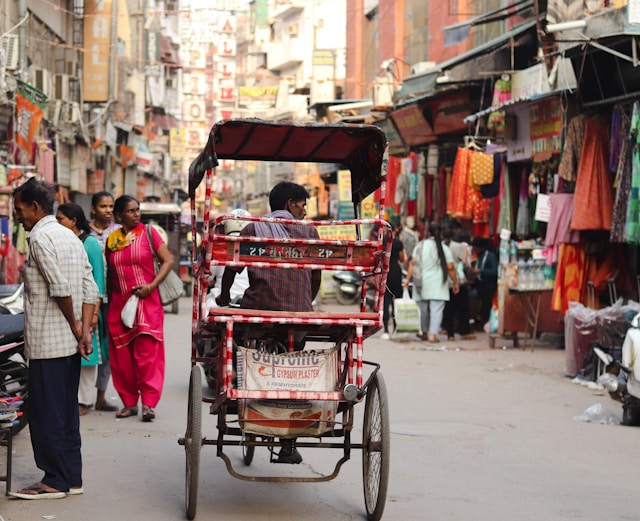
Delhi splits into two: the Mughal old city and Lutyens' New Delhi. Doing both properly takes two days. With one day you pick a side.
- Old Delhi (half day)
- Red Fort (6 am–6 pm, ₹550 foreign), Jama Masjid (free, dress code), Chandni Chowk walking tour, Paranthe Wali Gali for street food.
- New Delhi (half day)
- Humayun's Tomb (6 am–8:15 pm, ₹550 foreign), Qutub Minar (6 am–9 pm, ₹550 foreign), India Gate (open, free), Safdarjung's Tomb if time allows.
Agra: 1 night
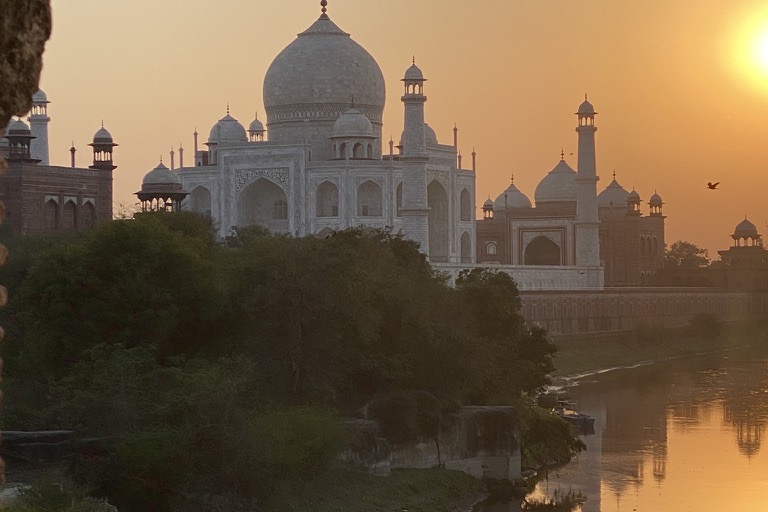
One night is enough. You arrive from Delhi by early afternoon, visit the Taj Mahal that same day, and have the next morning for Agra Fort before driving to Jaipur.
- Arrival afternoon
- Taj Mahal (gates open 6 am–5:40 pm, closed Fridays, ₹1,050 foreign). Arriving early afternoon gives you 3–4 hours to see it in the softer late-day light.
- Next morning (before driving to Jaipur)
- Sunrise Taj Mahal is possible even with one night — you pay a second entrance fee, but seeing it at both sunset and sunrise is worth it. Agra Fort (6 am–5:40 pm, ₹550 foreign) afterwards, then drive to Jaipur.
- If time allows
- Itimad-ud-Daulah / Baby Taj (₹250 foreign) or Mehtab Bagh (₹250 foreign) for a Taj view from across the river.
- En route to Jaipur
- Fatehpur Sikri (6 am–5:40 pm, ₹550 foreign) — Akbar's abandoned capital, 40 km from Agra. Stop for 1–2 hours on the drive.
Jaipur: 1–2 full days
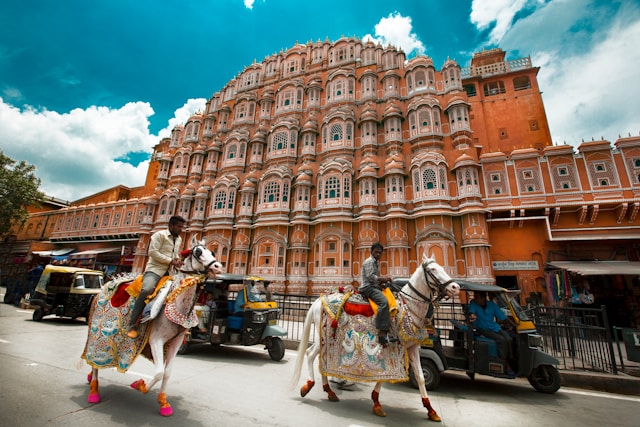
One day covers Amber Fort and a quick look at the old city. Two days lets you explore properly.
- Day 1 (essentials)
- Amber Fort (allow 2–3 hours), City Palace, Hawa Mahal (photo stop — it's a facade), Jantar Mantar.
- Day 2 (if you have it)
- Nahargarh Fort for sunset views, Jaipur's bazaars (Johari Bazaar, Bapu Bazaar), step wells, local food tour.
Entry fees: ASI Ticketing Portal, 2026 rates. Rajasthan state monument fees (Amber Fort, City Palace, Hawa Mahal) are separate and not included above.
Day-by-day: what each duration looks like
4 days (3 nights) — rushed
- Day 1: Delhi. Arrive, Red Fort, Chandni Chowk. One night Delhi.
- Day 2: Delhi → Agra. Morning Gatimaan Express (1 hr 40 min), arrive by lunchtime. Taj Mahal afternoon. One night Agra.
- Day 3: Agra → Jaipur. Agra Fort morning. Drive to Jaipur (4–5 hr). Amber Fort if time allows. One night Jaipur.
- Day 4: Jaipur → Delhi. City Palace morning. Drive or Shatabdi back (4 hr 25 min). Depart.
What you sacrifice: Humayun's Tomb, Qutub Minar, Fatehpur Sikri, Baby Taj, Jaipur's old city, sunrise at the Taj. You see the headline monuments but spend most of your time in transit.
5 days (4 nights) — the standard
- Day 1: Arrive Delhi. Afternoon in New Delhi — Humayun's Tomb, India Gate. Night 1 Delhi.
- Day 2: Old Delhi. Full morning: Red Fort, Jama Masjid, Chandni Chowk. Afternoon: Qutub Minar. Night 2 Delhi.
- Day 3: Delhi → Agra. Gatimaan Express (1 hr 40 min), arrive by lunchtime. Taj Mahal afternoon. Night 3 Agra.
- Day 4: Agra → Jaipur. Agra Fort morning. Fatehpur Sikri stop en route. Arrive Jaipur evening. Night 4 Jaipur.
- Day 5: Jaipur → Delhi. Amber Fort morning. City Palace. Shatabdi or drive back.
What you sacrifice: Baby Taj, Mehtab Bagh, Nahargarh Fort, Jaipur's bazaars. Jaipur gets the short end — one sightseeing morning before the return journey.
6 days (5 nights) — comfortable
- Day 1: Arrive Delhi. Afternoon in New Delhi — Humayun's Tomb, India Gate. Night 1 Delhi.
- Day 2: Old Delhi. Full day: Red Fort, Jama Masjid, spice market, street food. Night 2 Delhi.
- Day 3: Delhi → Agra. Gatimaan Express, arrive by lunchtime. Taj Mahal afternoon. Night 3 Agra.
- Day 4: Agra → Jaipur. Agra Fort morning. Fatehpur Sikri stop en route. Arrive Jaipur evening. Night 4 Jaipur.
- Day 5: Jaipur. Full day: Amber Fort, City Palace, Hawa Mahal, Jantar Mantar, bazaars. Night 5 Jaipur.
- Day 6: Jaipur → Delhi. Morning free (Nahargarh or shopping). Afternoon Shatabdi or drive back.
What this adds: a proper day in Jaipur, evening time in both Delhi and Jaipur, and breathing room. The extra night in Jaipur makes the difference between ticking off forts and actually exploring the old city.
7 days (6 nights) — relaxed
- Day 1: Arrive Delhi. Settle in, evening walk. Night 1 Delhi.
- Day 2: Delhi. Old Delhi morning, New Delhi afternoon. Night 2 Delhi.
- Day 3: Delhi → Agra. Gatimaan Express, arrive by lunchtime. Taj Mahal afternoon. Night 3 Agra.
- Day 4: Agra → Jaipur. Agra Fort morning. Baby Taj if time. Fatehpur Sikri stop en route. Arrive Jaipur evening. Night 4 Jaipur.
- Day 5: Jaipur. Amber Fort, City Palace, Hawa Mahal, Jantar Mantar. Night 5 Jaipur.
- Day 6: Jaipur. Nahargarh Fort, bazaars, step wells, local food. Night 6 Jaipur.
- Day 7: Jaipur → Delhi. Morning free. Afternoon Shatabdi or drive back. Depart.
What this adds: three nights in Jaipur means you can explore beyond the forts — the old walled city, Nahargarh at sunset, the bazaars at your own pace.
When to go
October to March. Daytime temperatures across all three cities sit between 19–32°C with minimal rainfall. November to February is the sweet spot.
Avoid May to June — Agra and Jaipur regularly hit 40°C. July to September brings monsoon: up to 236 mm of rain in Delhi and 229 mm in Jaipur in a single month.
Weather data: Open-Meteo ERA5 reanalysis, 10-year average (2016–2025).
We suggest adding Ranthambore with a Golden Triangle tour

Ranthambore National Park is 3.5 hours from Jaipur and the natural extension to any Golden Triangle trip. It adds one or two nights and a genuine chance of seeing a wild Bengal tiger — Ranthambore has one of the highest densities of tigers in India and the cats here are famously relaxed around vehicles.
The logistics are simple: drive from Jaipur to Ranthambore, do a morning and afternoon safari, then either return to Jaipur or drive directly to Delhi (roughly 6 hours). Most people slot it in after Jaipur, turning a 5-day trip into 7 or a 7-day trip into 9.
Safaris run from October to June (the park closes during monsoon). Morning drives start before dawn and are the best for tiger sightings. Book zones and permits well in advance — popular zones like 3, 4, and 5 sell out weeks ahead in peak season.
We have written a detailed guide to adding Ranthambore covering safari zones, permit costs, the best time to visit, and full 7 and 9-day itineraries.
Common questions
How many days do you need for the Golden Triangle?
Five days is the minimum for a comfortable trip. Six or seven days lets you explore each city properly and avoid spending entire days in a car.
Can you do the Golden Triangle in 4 days?
You can, but it means one night per city with most daylight hours spent driving. You will see the Taj Mahal, Amber Fort, and Red Fort but miss smaller sites and any sense of the cities themselves.
Is 7 days too long for the Golden Triangle?
No. Seven days lets you add a Ranthambore tiger safari. It also means mornings at monuments before the crowds and afternoons exploring neighbourhoods rather than sitting in traffic.
What is the best time of year for the Golden Triangle?
October to March. Daytime temperatures are 19–32°C with minimal rain. Avoid May to June when temperatures reach 40°C, and July to September when monsoon brings heavy rainfall.
Need help planning?
We build private Golden Triangle itineraries tailored to your dates and pace.
GET IN TOUCH