Ladakh Sarai has been putting travellers up since 1978, only a few years after Ladakh first opened to the outside world, when a group of British adventure travel pioneers built a camp near Leh modelled on the Silk Road caravanserais where traders and monks once broke their journeys. Almost five decades on, it is run by two Ladakhis, Lotus Sandup and Rigzin Namgyal, and remains the flagship of a small collection that now reaches into the Zanskar Valley.
A village address, not a hotel strip
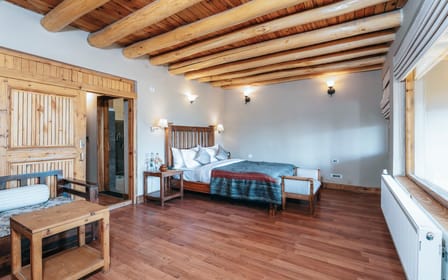
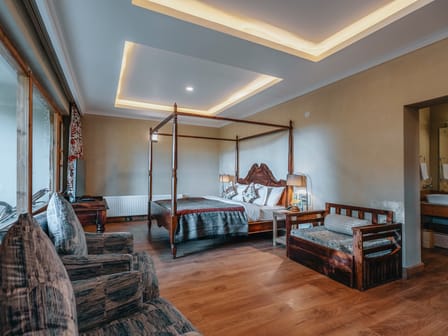
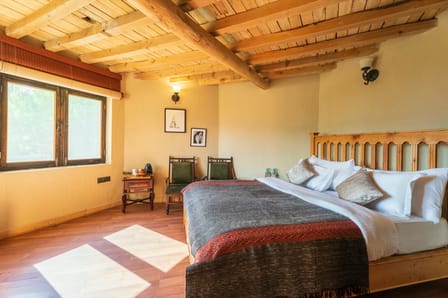
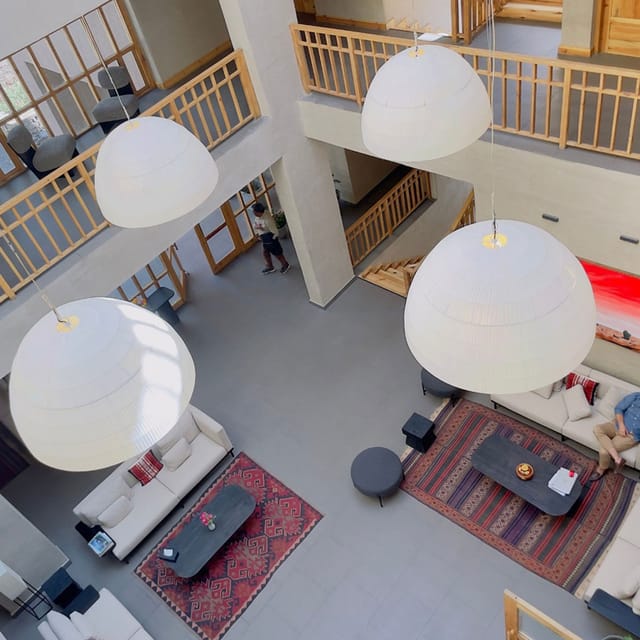
The residence sits in Ayu village on the Saboo road, in the Indus Valley outside Leh, built in traditional Ladakhi stone and mud. Rooms come as duplexes with a lounge below and the bed upstairs, chalets with private sit-outs, and mud huts raised in the old Himalayan way; chalets and duplexes open onto balconies facing the valley. One decision tells you what sort of place this is: televisions have been removed from every room, with a single shared set kept in the Sarai Hall for anyone who insists. In their place are a wooden-floored yoga hall looking at the mountains, a quiet library, and large windows that frame the gardens and the peaks beyond.
The owners call their approach stewardship, not just hospitality: decisions on water, waste and guest education are made for a fragile high-altitude desert first.
A base for the Indus Valley and beyond
The front desk builds itineraries to order, tailored to whatever mix of adventure, culture, history and rest you are after. The kitchen works with what the region gives: sun-ripened apricots, foraged wild herbs, mountain trout. When you are ready to go deeper, two sister sarais wait in Zanskar: Zang'ser Sarai, seven cottages by the river, and Tara Mountain Sarai, a five-tent camp on a mountainside farm at Purne. Few places in Ladakh can claim this much history of looking after travellers, and fewer still wear it this lightly.