First time in India?
Start here.
How long you need, the three routes that work first time, when to go, why private beats a group, and what a trip actually costs with the flights taken out. Written by a small team that has been sending people to India for twenty-five years and sells its own trips at one clear price.
Checked 16 September 2026 · journey prices update live
Ten days minimum.
Two weeks is right.
India rewards depth over distance. The first-timer's mistake is trying to see the north and the south in one go; the trip becomes a series of airports. Pick one region and give it the time.
- 7 to 8 daysThe Golden Triangle: Delhi, Agra for the Taj Mahal, Jaipur. Five nights on the ground, a travel day each end, no internal flights.
- 12 to 14 daysOne state properly. Rajasthan in a loop by car, or Kerala from the hills to the backwaters to a beach. Two nights in most places, so you unpack.
- 14 to 16 daysNorth plus a beach: the Golden Triangle and southern Rajasthan, then one flight to Goa to finish on the sand.
Ten days is not too rushed if it stays in one region. Ten days that includes Delhi, Rajasthan, Varanasi and Kerala is.
Three routes that work first time
Each is a private journey we sell, with the hotels named on the page before you book. Prices are per person, two sharing, taxes in, land only.
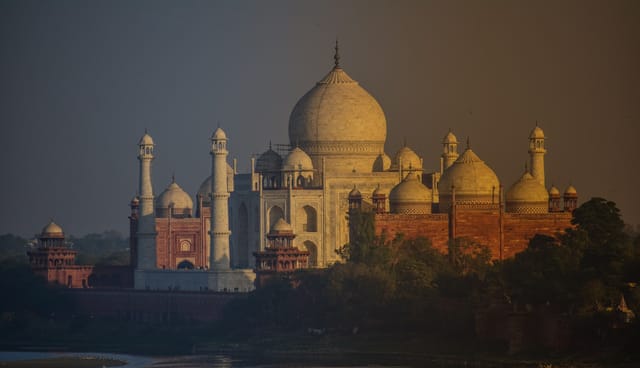
The Boutique Golden Triangle
The classic first trip: Delhi, the Taj Mahal at Agra, and Jaipur. Enough for a first taste without a single internal flight.
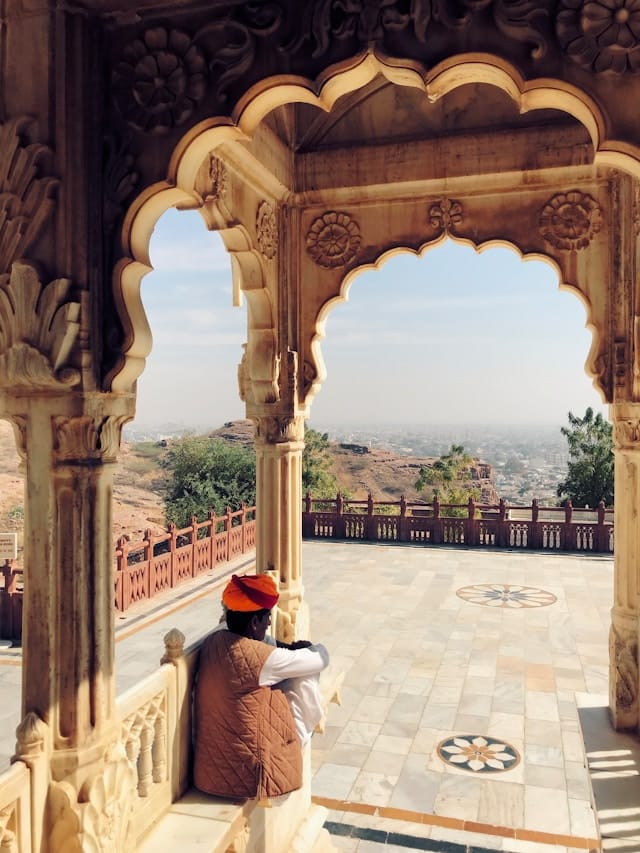
Rajasthan Grand Journey
Forts, painted havelis and a night by the dunes. One state, one car, no backtracking: the route that suits most first-timers with two weeks.
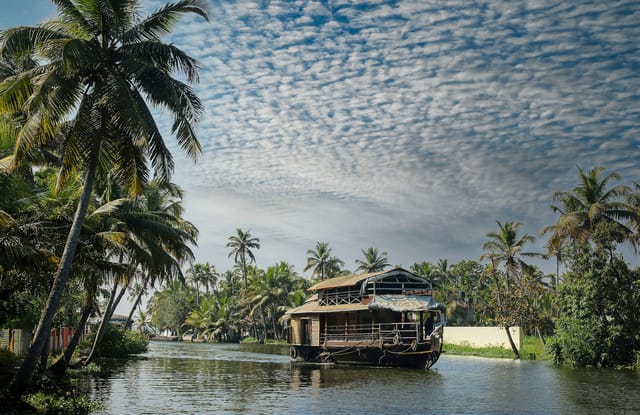
Kerala Odyssey
Tea hills, a wildlife lake, a night on a houseboat and a beach to finish. Slower, greener and easier on the senses than the north.
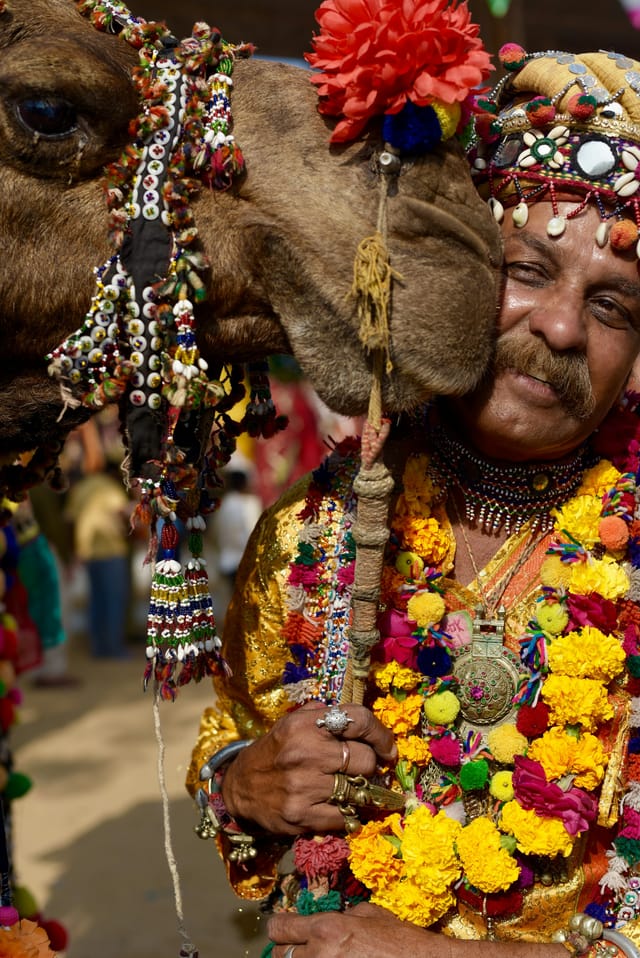
Golden Triangle, Pushkar, Udaipur & Goa
The Golden Triangle, then Pushkar and Udaipur, then a flight down to Goa to end on the sand. The fortnight most people picture when they say "India".
North or south?
The north is the India of forts, palaces, the Taj Mahal and the desert. It is louder, drier and busier, and it is where most first trips go, for good reason. The south, and Kerala above all, is green, coastal and slower: tea hills, backwaters, temples rather than forts, and food built on coconut and rice. Choose the north if you want monuments and the postcard, the south if you want quiet and water. Do both on a second trip.
Want the whole shelf? Every journey, shortest first. Travelling within Rajasthan only? The Rajasthan page picks a route in three taps.
October to March in the north. October to April in Kerala.
The dry season is the season. In the north, November to February gives sunny days and cool nights; the desert drops to single figures after dark in December and January, so pack a layer. October and March are warmer and a little quieter.
April and May are very hot in the north, and the monsoon runs roughly June to September: green, atmospheric, cheap, and wet. Kerala is pleasant a month longer, into April.
The fortnight around Christmas and New Year is peak. Hotels add surcharges and some make gala dinners on 24 and 31 December compulsory, which is why every journey quotes those dates separately. Festivals move the calendar too: Diwali in October or November, Holi in March, Pushkar's camel fair in November. Our Diwali guide says what to expect if your dates land on it.
Private. Your car, your driver, your pace.
Everything we sell is private: your own dates, an air-conditioned car and driver throughout, and a licensed local guide in each city rather than a coach party and a flag. In India the pace is the whole trip. A long lunch, a second morning at the fort, an early night after a 5am start for the Taj: on a private trip those are yours to call.
It costs less than people expect. The car and driver are the same price whether one or two of you ride in it, so a couple on a private trip often pays close to what a group seat would, with none of the waiting.
Solo? The same trips work with a room of your own; each journey page says whether its price is two sharing or solo, and we quote the other on request.
Land only. One price, taxes in.
Our prices are per person with two sharing, taxes included, and land only: you book your international flights, we do everything from the airport onwards. Operators who quote flight-inclusive are not cheaper; they have added the flight. Compare land against land.
- The hotels shown, by name, with breakfast every day
- A private air-conditioned car and driver throughout
- Licensed local guides in each city
- Monument entrances as listed, including the Taj Mahal on the Golden Triangle journeys
- Airport transfers, tolls, parking and Indian GST
- International flights
- Visas and travel insurance
- Lunches and dinners, unless the journey says otherwise
- Tips
- Christmas and New Year dates, quoted separately
Every journey page lists its own inclusions in full, and they differ between journeys: the Kerala routes add dinner, the Rajasthan loop leaves monument entrances and guides to you. Read the list on the page you are buying, not a generic one.
Already have an itinerary, from a friend or from ChatGPT? Paste it and we send it back priced, with named hotels and a car and driver. No charge for the quote.
The six things people ask us the week before
- Visa. Most nationalities apply online for an e-Visa before travel. Our step-by-step visa guide.
- Packing. Loose natural fabrics, a scarf for temples and sun, shoes that slip off, a warm layer for winter nights in the north. Packing list by season.
- Stomach. Bottled or filtered water, hot food, and a little caution for the first two days. Delhi belly and how to avoid it.
- Money. Rupees, cash still matters, cards work in hotels and bigger shops. Money guide.
- Phone. A local SIM at the airport is cheap and worth the queue. Which SIM, and how.
- Safety. Honest answers, including for women travelling alone. Is Delhi safe for tourists? and for solo female travellers.
One date to know: the Taj Mahal is closed on Fridays. Every Golden Triangle journey we sell is built around that, but if you are planning your own, put Agra on any other day.
For everything in-destination, from the metro to where to drink craft beer, the city guides cover Delhi, Jaipur, Jodhpur, Jaisalmer, Udaipur, Bikaner, Goa, Mumbai, Kolkata, Lucknow and Amritsar.
Straight answers
How many days do you need for a first trip to India?
Ten days is the honest minimum for one region, and two weeks is the sweet spot. Seven or eight days covers the Golden Triangle (Delhi, Agra, Jaipur) with five nights on the ground and a travel day each end. Twelve to fourteen days covers Rajasthan or Kerala properly. Trying to see north and south in ten days means two internal flights and very little of either.
Is a 10-day India itinerary too rushed?
Not if you stay in one region. Ten days in Rajasthan, or ten days in Kerala, with a private car and two nights in most places, is comfortable. Ten days that tries to include Delhi, Rajasthan, Varanasi and Kerala is rushed: you spend the trip in airports.
What is the best route for first-time visitors to India?
The Golden Triangle if you have a week: Delhi, Agra for the Taj Mahal, then Jaipur. Rajasthan if you have two weeks: Jaipur, Bikaner, Jaisalmer, Jodhpur, Pushkar and Udaipur in one loop by car. Kerala if you want something gentler: Kochi, the tea hills at Munnar, Thekkady, a houseboat night at Alleppey and a beach at Poovar. All three are private trips with your own car and driver.
When is the best time to visit India for a first trip?
October to March for the north (Delhi, Agra, Rajasthan): dry, sunny, cool at night. October to April for Kerala and the south. April and May are very hot in the north, and the monsoon runs roughly June to September. The fortnight around Christmas and New Year is peak: hotels add surcharges and some make gala dinners compulsory, so we quote those dates separately.
Are private or group tours better for India?
For a first trip, private. Everything we sell is private: your own dates, your own air-conditioned car and driver, and a licensed local guide in each city rather than a coach party. The pace is yours, which matters most in India, where a long lunch or an early night is often the right call. A private trip for two people costs less than most people expect because the car and driver are the same price whether one or two of you ride in it.
What is included in an India tour package?
Ours include the hotels shown, breakfast every day (some Kerala journeys include dinner too), a private air-conditioned car and driver throughout, licensed local guides in each city, monument entrances including the Taj Mahal on the Golden Triangle journeys, airport transfers, and all tolls, parking and taxes. Not included: international flights, visas, travel insurance, lunches and dinners unless stated, and tips. Each journey page lists its own inclusions in full; inclusions differ sharply between operators, so compare like with like.
How much does a mid-range India tour cost?
Land only, per person with two sharing, taxes in: from about £430 for five nights on the Golden Triangle, about £525 for ten nights across Rajasthan, and about £850 to £1,300 for ten to thirteen nights in Kerala and the south, at September 2026 prices. Add your international flights. Operators who quote flight-inclusive are not cheaper; they have simply added the flight.
Are meals covered on an India tour?
Breakfast is always included. Dinner is included on some Kerala journeys and on the night at the desert camp in Rajasthan; the journey page says which. Lunches are left open on purpose: eating out in India is cheap, good and half the point, and a driver who knows the road knows where to stop.
What kind of hotels are used?
Family-run heritage properties, havelis and small boutique hotels, chosen one by one and shown by name on every journey page before you book. Not chain hotels and not a "similar or equivalent" clause.
What should I pack for a two-week India trip?
Light, loose, natural fabrics; a scarf or shawl for temples, mosques and sun; shoes that slip off easily, because you will remove them at every religious site; a warm layer for October to February evenings in the north, when the desert drops to single figures; a hat, sunscreen and a refillable bottle. Our Delhi packing guide goes season by season.
Is India suitable for older travellers or for families?
Yes, on a private trip. A car and driver means no coach steps, no fixed departure times and a rest whenever you want one; hotels are booked with the ground floor or a lift in mind when you tell us it matters. Families get the same car and the same pace, and a pool on the route where one exists. Tell us who is travelling and the journey is adjusted before you pay.
Do I need a visa for India?
Almost certainly yes. Most nationalities, including British, American, EU, Canadian and Australian passport holders, apply online for an e-Visa before travel. Our guide walks through the application and the current fees.
Pick a route,
or ask a person
Every journey has one price and the hotels named. If you would rather talk it through first, a human answers on WhatsApp or email, Monday to Saturday.