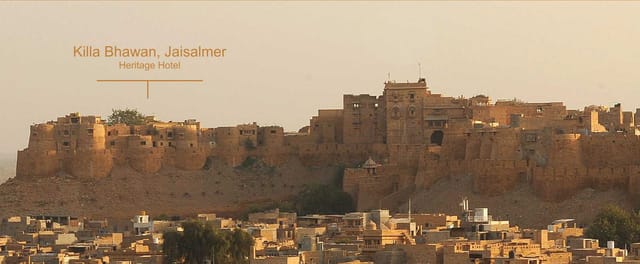
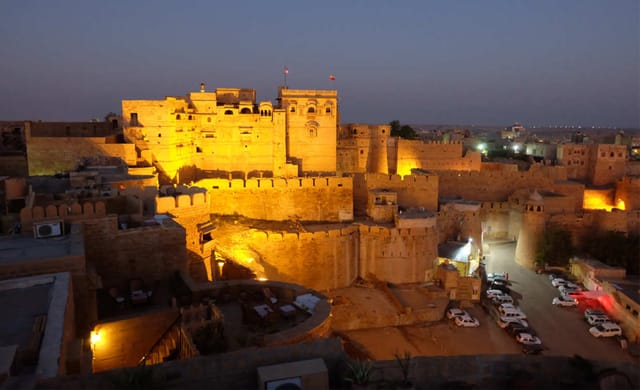
Jaisalmer is one of the very few forts in the world that people still live in, and the first decision here is whether you sleep inside its walls or look at them from outside.
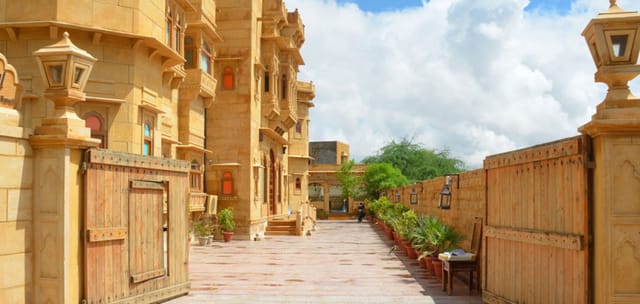
Inside the living fort, the buildings are honey sandstone and the lanes are too narrow for a car. Killa Bhawan is an eight-room heritage house built into the bastions themselves. Garh Jaisal Haveli sits at Kotari Para with a rooftop over the fort's rooftops. Rooms are small, luggage is carried the last stretch, and the position is exceptional. It is worth knowing that water use inside the fort is a live conservation question, which is part of why some visitors choose otherwise.
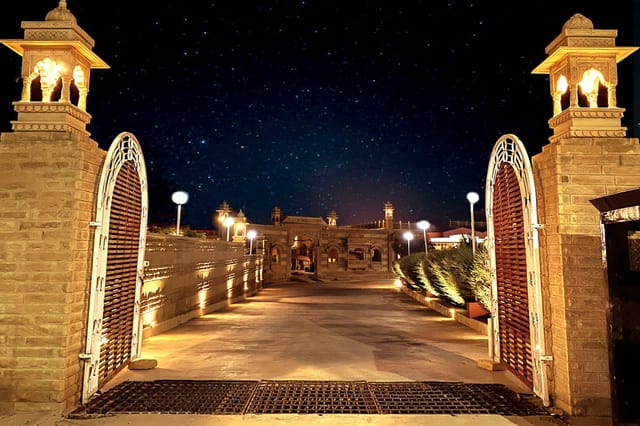
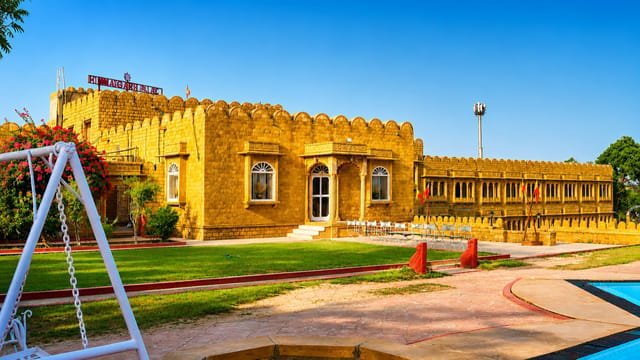
Below and outside the fort, the havelis are larger and the plumbing is easier. Gulaal is a sandstone haveli built the traditional way around two open courtyards. Himmatgarh Palace has Bhurj tower rooms, a garden pool and views across to the fort, which is the compromise a lot of people want: the fort in the window rather than under your feet. Jaisalmer Resort adds lawns and a pool a short walk from the fort.
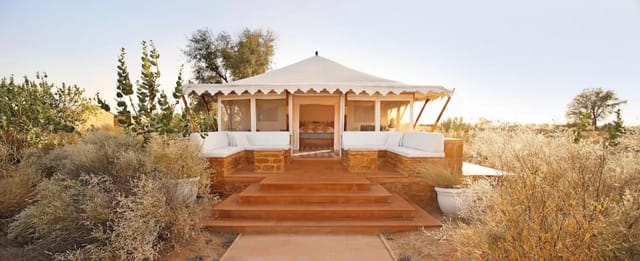
Out in the dunes, SUJÁN The Serai is a palace of canvas in the Thar, on its own land well beyond the city. This is a separate kind of night rather than a base for seeing the town.
Jaisalmer is a long way west: about five and a half hours by road from Jodhpur, and the overnight train from Delhi and Jaipur is a genuinely good way to arrive. October to March is the season. Sam and Khuri, the dune areas, are 40 to 45 km out for sunset.