Kumbhalgarh Wildlife Sanctuary runs to 610.53 square kilometres across the Rajsamand, Udaipur and Pali districts of Rajasthan, in the Aravalli range. It was notified as a sanctuary on 13 July 1971. It is a sanctuary and not a tiger reserve, which changes almost everything about visiting it: there are no tigers here, the permit system is lighter, and the fort the sanctuary wraps around is as much the reason to come as the animals.
What lives here
The state's own description lists jungle cats, hyenas, jackals, leopards, sloth bears, nilgai, sambhar, chausingha, chinkara and hares, and singles out wolves as an animal you can follow and watch going about their business. Leopards and wolves are the headline. Anyone selling you a Kumbhalgarh tiger safari is selling you something that does not exist.
The three zones
The sanctuary is permitted in three zones, and the forest department names them: K1 (Aret to Kumbhalgarh), K2 (Ranakpur) and K3 (Bijpur). You pick a zone, a date, a shift and a vehicle when you apply for the permit, then enter every member of the party by name and ID.
How the permit works, and how it differs from a tiger reserve
Kumbhalgarh is booked through the state portal's Other Wildlife Permit route rather than the tiger reserve route. There is no zone allocation to argue about, no Tatkal release, no quarterly on-sale date at eleven or twelve o'clock, and no seat auction. You choose your zone.
One rule to know: the department will not let the same login book again for the same day with the same zone, the same date and the same IP address. Families booking several vehicles from one hotel wifi run into this.
We have not found the sanctuary's permit fee published anywhere official. The state portal shows it during booking rather than on a public page, and we would rather say so than repeat a figure from a blog. Ask your lodge what the drive costs all in; at Kumbhalgarh the jeep and the driver are the larger part of the bill.
The rules that catch people out
Entry times are narrow and there are two of them. Morning entry runs 6:00 to 8:30. Evening entry runs 15:00 to 16:30. These are entry windows rather than opening hours, so arriving at nine in the morning means no drive. From a hotel below the fort that is a real risk, because the road up is slow.
The fort
Kumbhalgarh Fort was built in the 15th century by Rana Kumbha and is the second most important citadel in Mewar after Chittorgarh. Its wall runs some 36 km, wide enough to take eight horses abreast. Maharana Pratap was born here, and Maharana Fateh Singh renovated the fort in the 19th century. Badal Mahal, the palace of the clouds, is the piece most people photograph. In 2013 UNESCO inscribed Kumbhalgarh as one of the six Hill Forts of Rajasthan.
The fort and the sanctuary are not the same ticket, and the sanctuary encircles the fort rather than containing it.
Where we put you
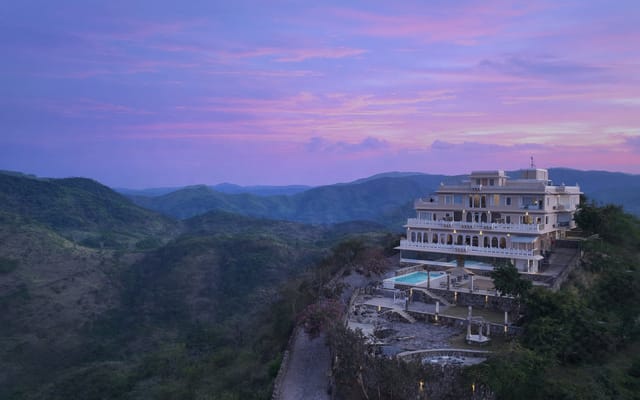
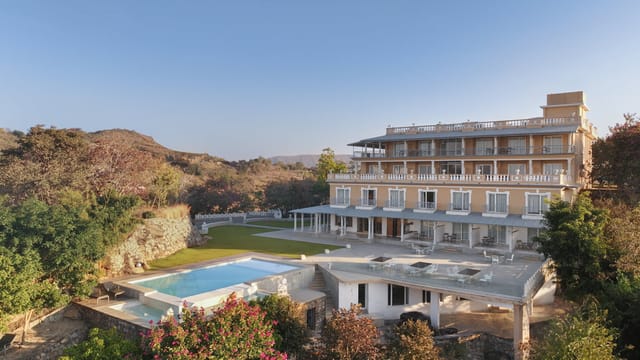
Fateh Safari Suites is suite-only, at 1,100 m in the Aravallis, looking across to the fort and out over the Marwar plains. Four suite categories, several with jacuzzis or plunge-pool access, built in locally quarried stone and hand-blocked textiles.
Fateh Safari Resort is the hilltop property at the same height, every Deluxe and Superior room with a private balcony onto the valley, a pool, a spa and a 37-seat restaurant. Dawn jeep safaris go from here into the sanctuary.
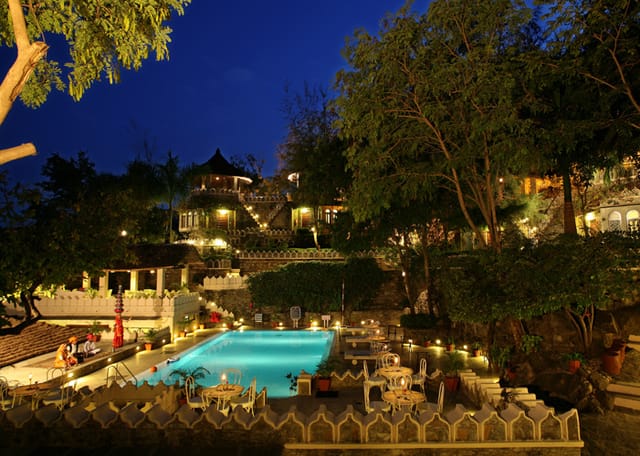
The Aodhi is an HRH Royal Retreat of twenty-six rooms and suites in stone cottages stepped down a wooded hillside below the fort, with poolside dining under the dark hills and folk musicians on the Angeethi lawns.
Getting there
The two official sources disagree on the distance and it is worth knowing both. The state booking portal puts the sanctuary about 65 km from Udaipur on the Udaipur to Pali to Jodhpur road. Rajasthan Tourism puts Kumbhalgarh Fort 84 km north of Udaipur and gives Udaipur airport as 98 km away. The honest answer is that it is a two to three hour drive from Udaipur city, and that the last stretch climbs.
Rajasthan Tourism also gives Chittorgarh at 147 km and Jodhpur at 189 km. The Ranakpur Jain temples sit beside the sanctuary's K2 zone, which is why most people arriving from Jodhpur come in that way. Your arrival day is a travelling day; the first drive is the morning after.