"Ten tents under an ancient banyan in rural Pench, with a star bed in the fields"
At the start of May every year, Jamtara Wilderness Camp takes itself apart. The tents come down, the floors come out, and the monsoon jungle moves back in; streams flow between the tent platforms until the camp is rebuilt in late September. It is the clearest statement of intent we have come across at an Indian safari camp: the land is only borrowed.
Tents furnished from a courtroom
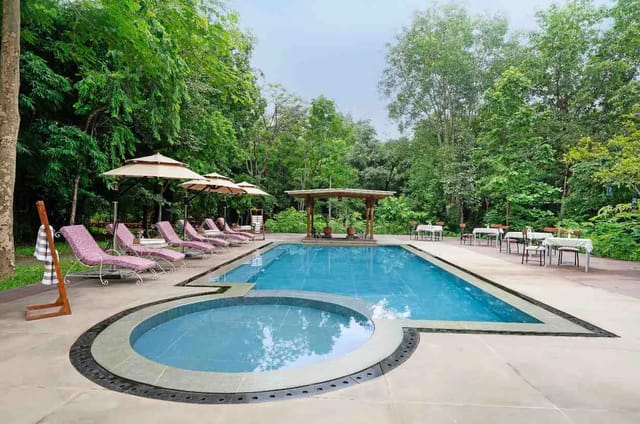
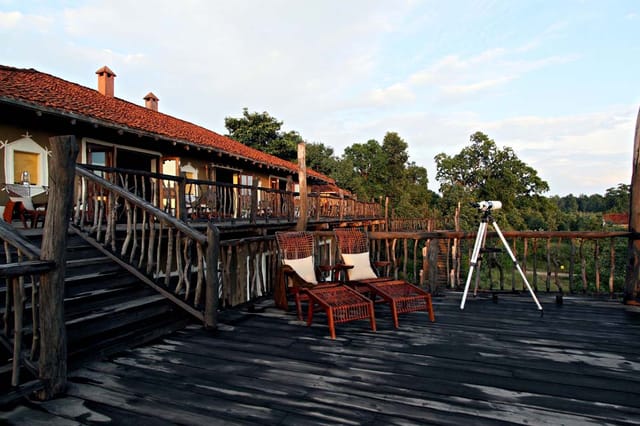
The camp is 10 luxury tents in rural Pench, set among tall arjuna trees near an ancient banyan rooted in a dry riverbed. Front panels roll up so you can lounge on the patio, which looks straight over that riverbed; bathrooms are permanent structures for comfort. Almost nothing here was made new: the floors are seasoned wood reclaimed from ship decks, the writing desks once served the Supreme Court of India, and the 1970s art deco sofas came from Delhi embassies. Dining is farm to table, sourced from farmers in the surrounding villages, and the kitchen promises that even in a week your menu will not repeat. There is an infinity pool, and a vertical gramophone for the evenings.
"Nature takes over through the monsoon. Streams start to flow, wildlife takes refuge near the tent structures, and our impact on the land is minimized."
Three generations of Project Tiger
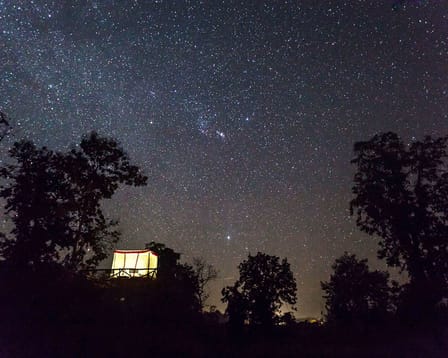
Few Indian lodges carry a pedigree like this. Kailash Sankhala led India's first tiger census and was chosen by Indira Gandhi to head Project Tiger in 1973; he founded the Tiger Trust in 1989. Pradeep Sankhala set up Kanha Jungle Lodge in 1989 and Bandhavgarh Jungle Lodge in 1990. Amit Sankhala, the third generation, carries the legacy at Jamtara today. The signature experience is the Star Bed, a machan platform in the fields where you sleep under the open sky the way village crop-watchers have for generations, part of a revenue-sharing plan to rewild eighty acres of farmland into the Pench corridor. Pench itself, the 758 square kilometre reserve that inspired Kipling's Jungle Book, is on the doorstep.