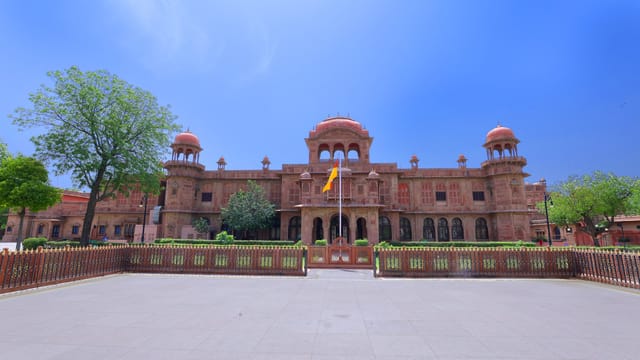
Bikaner gets skipped, which is most of its appeal. It sits north of Jodhpur and east of Jaisalmer, and the palaces here are grand, quiet and a good deal cheaper than the equivalent in Udaipur or Jaipur. We hold five stays in and around the city.
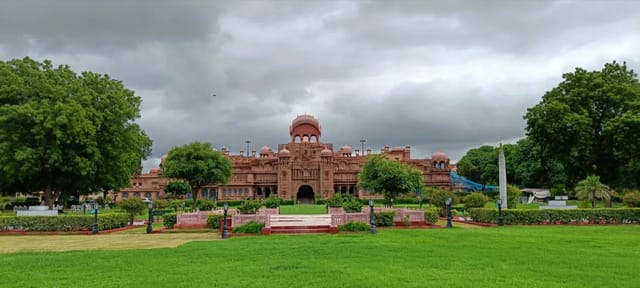
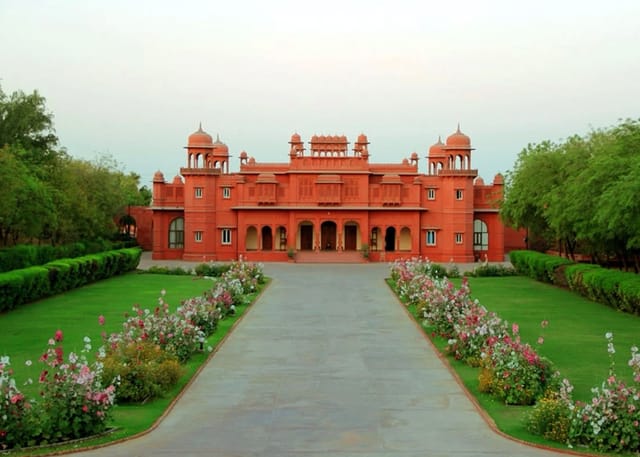
The Lallgarh complex, on the north edge of town, is the reason to come. Sir Samuel Swinton Jacob designed the red sandstone palace for the Maharaja of Bikaner, and it is now two hotels: The Lallgarh Palace, with billiards rooms and the original public spaces, and The Laxmi Niwas Palace, the wing built to house the Maharaja's guests. The carved sandstone work here is the finest in this part of Rajasthan, and you can walk the corridors without a crowd.
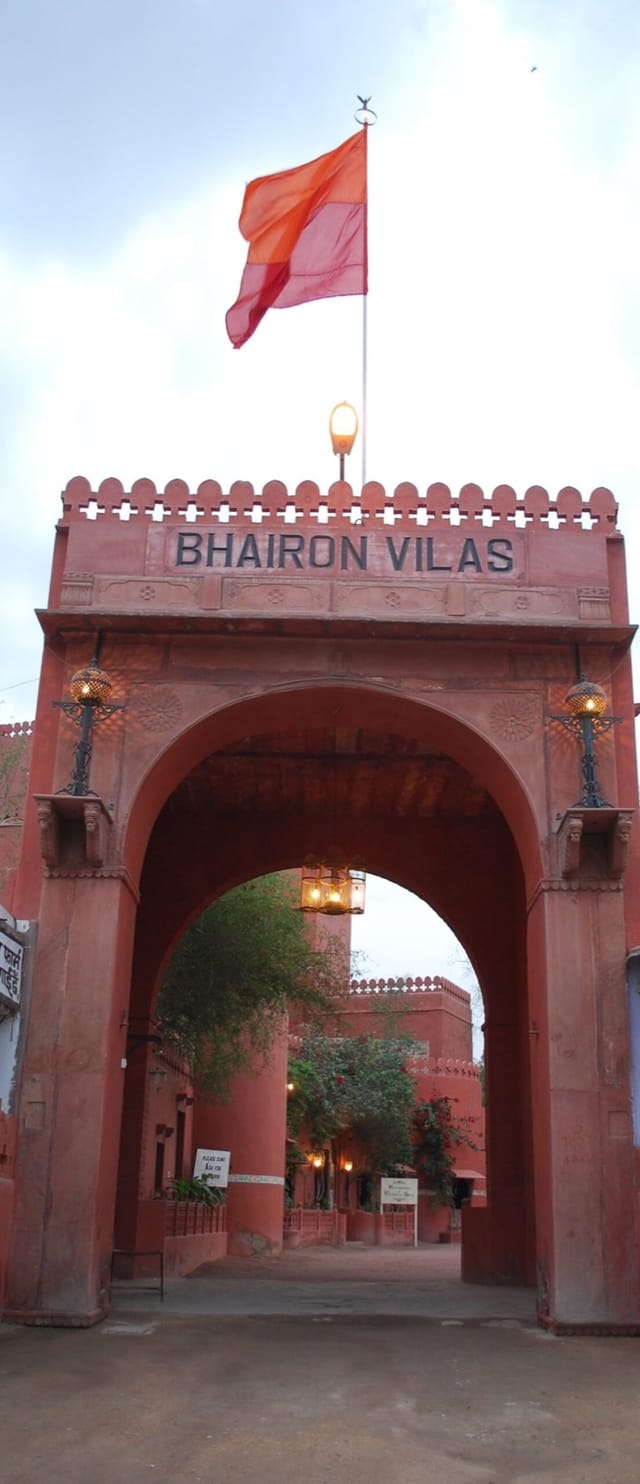
In the old city, Bhairon Vilas has 18 rooms in an 1872 haveli built for Bikaner's prime minister, still lived in by the family. It sits just below Junagarh Fort, which is the other thing to see and is unusually complete because Bikaner was never taken.
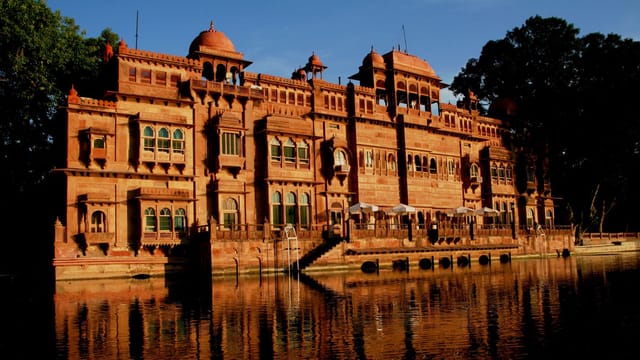
Out at the desert edge, Gaj Kesri has the Thar starting at its boundary wall. Gajner Palace is further out, about 30 km west: 45 rooms and historic suites in a lakeside hunting palace built by Maharaja Sir Ganga Singh, with a bird-heavy lake in front of it.
Bikaner is roughly five hours by road from Jodhpur, six from Jaipur and five and a half from Jaisalmer, which makes it the natural break on the northern loop. The Karni Mata temple at Deshnoke, 30 km south, and the camel research farm are the usual half-day additions.