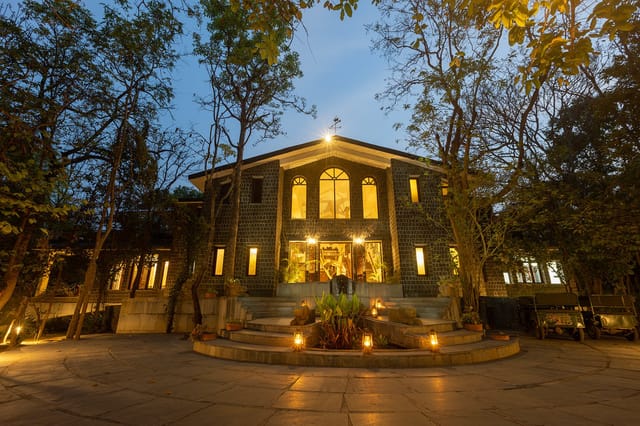
Bagh Villas was built by three friends who fell under the influence of Fateh Singh Rathore, the conservationist their own site calls "the Tiger Man himself", and it shows: this is a small camp on the Mukki side of Kanha Tiger Reserve where the conservation thinking came before the architecture. The tents are Jodhpuri shikar style crossed with an African safari camp, pitched on raised wooden platforms along a lake at the edge of Baherakhar village in Balaghat district.
Two ways to sleep by the lake
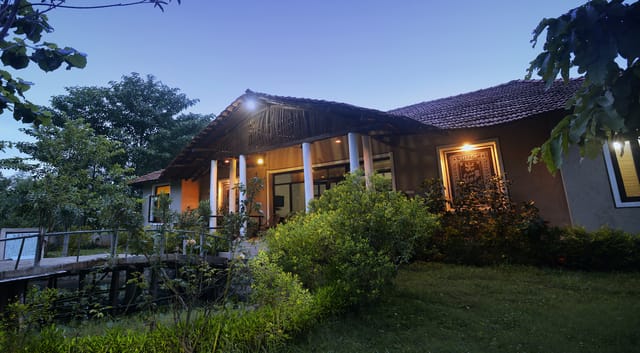
There are just two categories. Tented Suites, insulated against heat and sound and built mainly from recycled wood, metal and bamboo, each with a bamboo shower, double-vanity basins and a private lakeside verandah. And two Lakeside Cottages, each with two ensuite bedrooms and an attached pantry, tucked into a quiet corner above a private lake; the sensible choice for a family of four or two couples, with a bonfire on request.
A camp on the quiet Mukki side of Kanha where the conservation thinking came before the architecture.
The showpiece amenity is a 54-metre lakeside infinity pool with UV filtration, long enough for real swimming, with poolside dinners and campfires on winter nights. The spa's therapists were trained by the camp's Indonesian spa manager; the fixed menu roams from regional dishes to Thai, Mediterranean, Italian, Chinese and Indonesian cooking, with most ingredients from the camp's own organic garden or selected local farmers.
Kanha, done properly
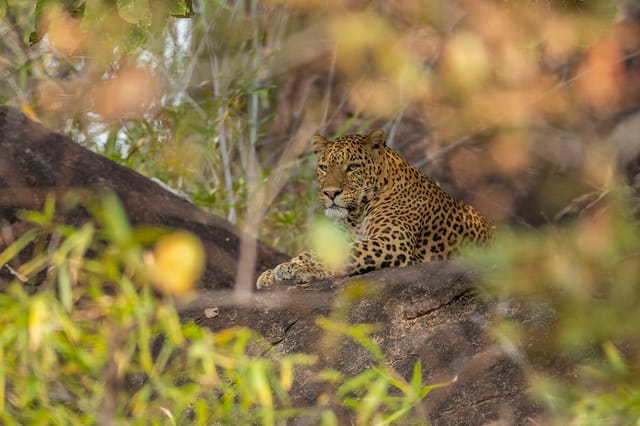
Safaris go into the park's four core zones, six guests to a jeep, and Kanha's numbers justify the journey: the site counts about 120 tigers and some 300 bird species. Between drives there are Trek-bike trails from a 6.5 km beginner loop to 17-22 km rides with a river crossing, binoculars and field guides kept for birders, and a stroll to Banda tola, a largely Baiga hamlet nearby. The park is open from 1 October to 30 June; Raipur is the closest airport, and chartered flights can land at the Birwa airstrip a few kilometres away.