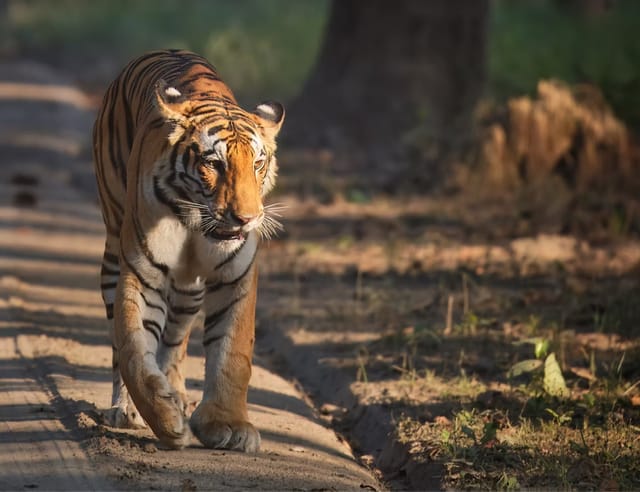
Jaagir Manor began life 80 years ago as a hunting lodge, and it still sits where the hunters wanted to be: on the edge of the 496-square-mile Dudhwa wildlife corridor in the Terai, the wet grassland belt where the Himalayas meet the Gangetic plain. Dudhwa is the tiger reserve India forgot to crowd. The park holds all five Indian deer species, more than 450 recorded bird species and a reintroduced population of one-horned rhinoceros, and the manor's own line is that its safaris are extraordinary and uncrowded. On current evidence of Indian park tourism, that is a genuine rarity.
Fifteen keys at the forest's edge
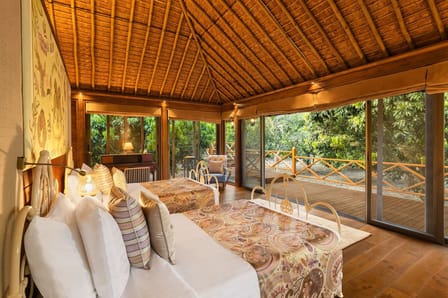
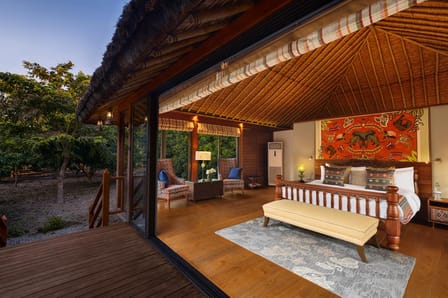
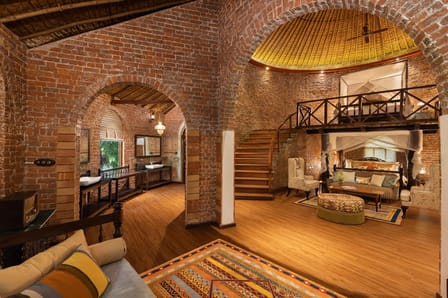
The property counts just 9 suites and 6 villas, art deco bones meeting jungle green. Junior Suites sit in the heritage wing with antique statement furniture; the Premium Suite adds separate dressing and sitting areas behind an open verandah. The SeleQtions Villas stand on wooden stilts among guava orchards, linked by a sky-walk, each with a floating open-air verandah; the Brick Villa raises a canopy bed under a 22-foot ceiling. A Pawcations junior room takes dogs too, with a customised pet menu and a pet minder on request.
An 80-year-old lodge, fifteen keys, and a tiger reserve most of India has never visited.
Safari days, machaan nights
Private safaris go out with in-house naturalists, alongside guided birding walks and a twilight drive through the surrounding farmland. Evenings are the lodge's speciality: dinner for up to four atop the machaan, jungle feasts under the open sky, sundowners as the light drops. Jaagir Pavillion and The Machan cook Indian and global menus, while the Safari Club pours cocktails with finger food. Beyond the gates lie the Kishanpur sanctuary on the banks of the Sharda river and more than 40 Tharu villages with clay-mural houses. For wildlife travellers who have done Ranthambore and Corbett, we would put this first: the story is the forest, and the manor tells it well.