Some heritage hotels bought their fort. This family never left theirs. The Rawla, the chieftain's residence of Jojawar town in Pali district, has housed the same Sonegra Chouhan line since 1780, back when the Thakurs commanded the garrison on the Marwar-Mewar border and collected the customs on trade passing between two frequently warring kingdoms. An ancestor fell defending Mehrangarh's gates in 1808; the Maharaja of Jodhpur doubled the family's lands for it, and his memorial still stands outside the great fort.
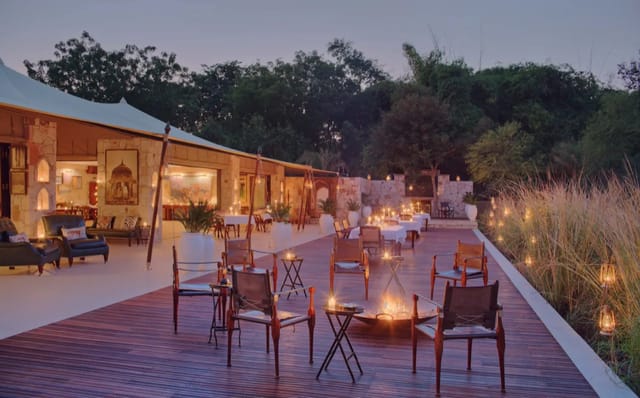
The family opened their fort as a hotel in 2001 and still own and run it. Thirty-five rooms were worked out of the existing buildings following Vaastu principles, no two alike, all air-conditioned, and the pool went in beside the Zanana Mahal, the former ladies' quarters. Dinner moves around the fort: poolside, the Bar Terrace, the Pol Terrace or the Dining Hall, and guests who ask are let into the family kitchen to try Rajasthani cooking themselves.
The safaris are the point
Jojawar's countryside is the draw, and the Rawla works it three ways. Jeep safaris go out in the family's fleet of vintage vehicles to the homesteads of the Rabari camel herders, a community found around Jojawar and nowhere much else. Horse rides leave from the fort's own stables into country no vehicle reaches, with long expeditions of two to seven days for riders. And the train safari is the oddest and, we suspect, the best of the lot.
A slow train through some of the oldest mountains on earth
That is the daily Jodhpur to Udaipur service, ridden for one escorted hour up the Kambli Ghat pass through the pre-Cambrian Aravallis, with a vintage Chevy transfer and tea at a Forest Rest House on the way back.
Money that stays in the hills
The family shares safari profits with the herding communities the excursions visit, an arrangement meant to keep old professions alive rather than turn them into a show. It reads like the honest version of village tourism.