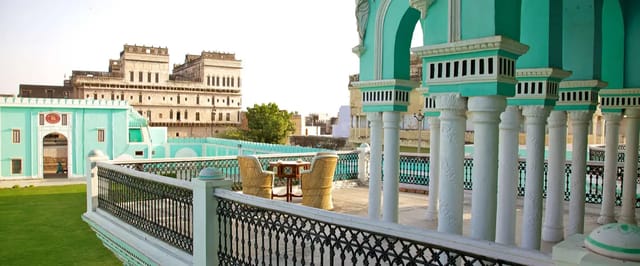
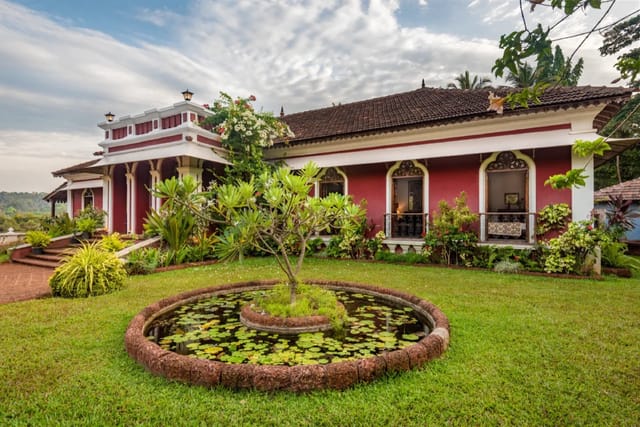
Badi Kothi was the residence of the zamindar Perumal, and its past is written all over it. Under the British Raj it served as a headquarters for tax collection, defaulters were held in the jail built inside the premises, which you can still see. Mahatma Gandhi, Jawaharlal Nehru and Lal Bahadur Shastri all visited; Shastri lodged here with his family, and legend has it that the saint-poet Mirabai stayed too. During the independence years, a printing press inside the kothi put out poems and articles about a free India.
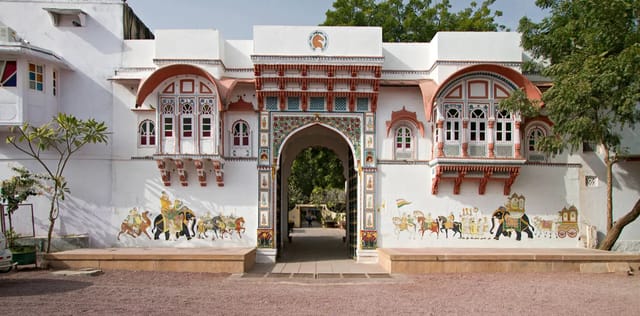
The building itself is the draw: an original sandstone façade, pietra dura carvings on the temple, jharokha balconies and courtyards lined with stained-glass doors that glow like jewels after dark. The restoration keeps all of that while adding the comforts you actually want, air-conditioned rooms, a lift, Wi-Fi and a rooftop pool that looks out over the river.
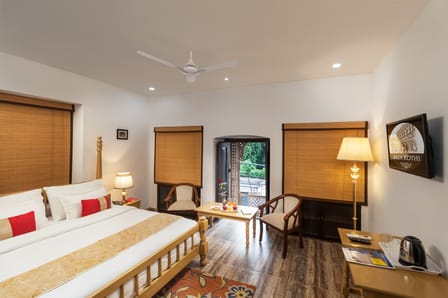
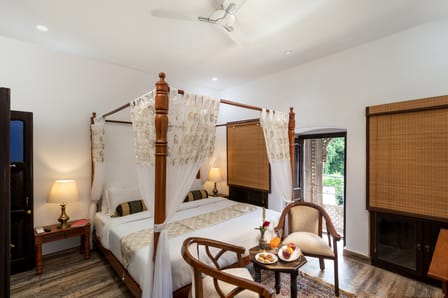
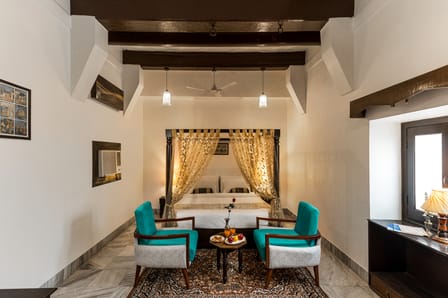
There are just 21 rooms in three types, each named for a piece of the house: Kivaad Rooms after the old ornamental doorways, Gaukha Rooms after the centuries-old jharokha-style carvings, and the Shastri Suites after their most famous lodger. On the ground floor is a pure-vegetarian restaurant serving Allahabadi dishes you will struggle to find elsewhere, nimona, fara, khasta kachori, taheri, alongside the usual Indian, Chinese and Italian menus.
The location is the other half of the story. This is Daraganj, the old riverside quarter: Sita Samahit Sthal is 60 metres away, the Veni Madhav temple 300 metres, and the Triveni Sangam, the confluence of the Ganga, Yamuna and the unseen Saraswati, about five minutes by road. Varanasi is roughly two hours away, which makes this a natural heritage stop on the Varanasi–Prayagraj–Lucknow run.