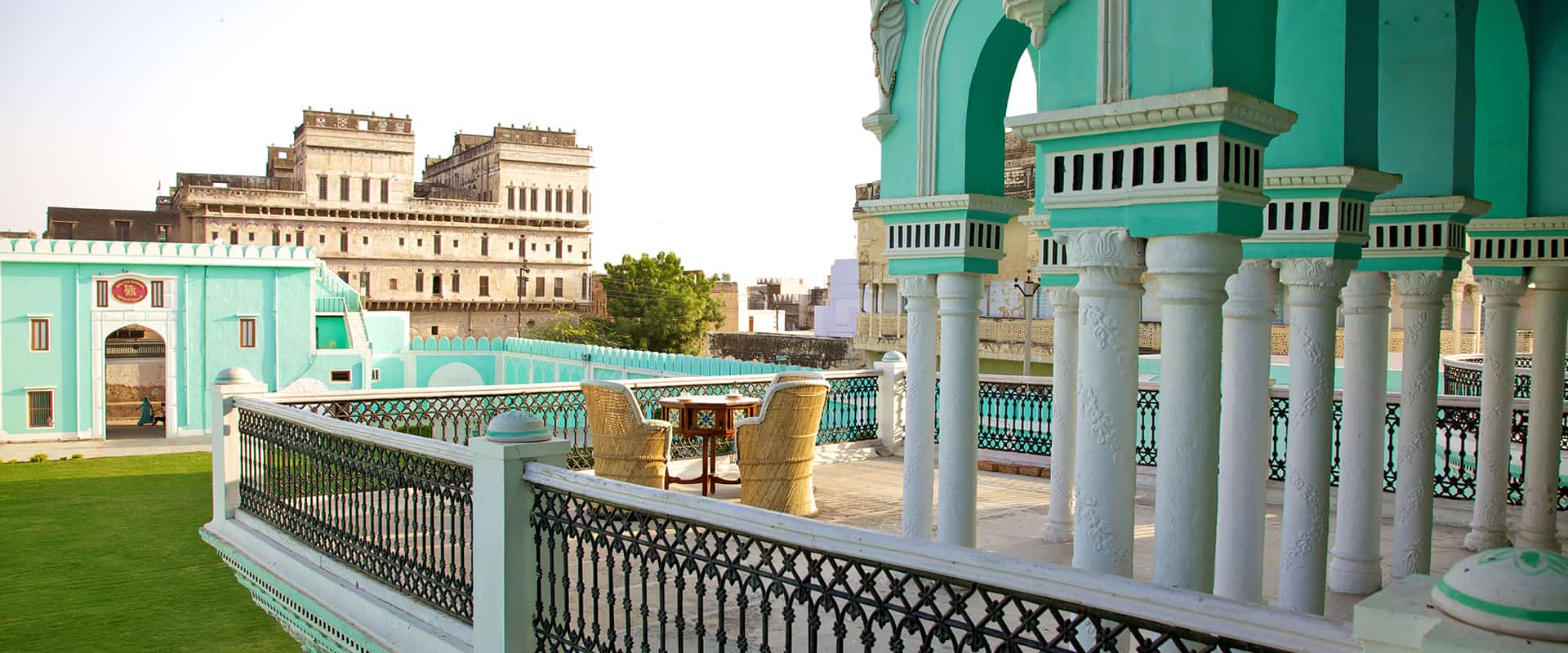
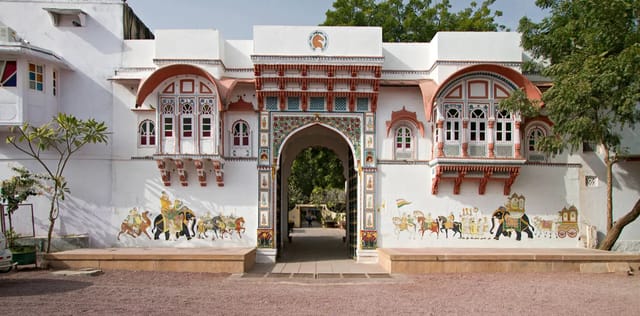
In the 1920s a Churu merchant named Malji Kothari, pulse doctor, art lover and devotee of Indo-European architecture, raised a haveli and called it simply his kamra, his room, and the name outlasted him. Maharaja Ganga Singh of Bikaner stayed here as a royal guest on his journeys through the Thar. The house is painted the colour of new leaves and covered wall to ceiling in frescoes, Italianate plasterwork colliding happily with Shekhawati mural work; a painted steam train runs across one ceiling.
Restored slowly, and honestly
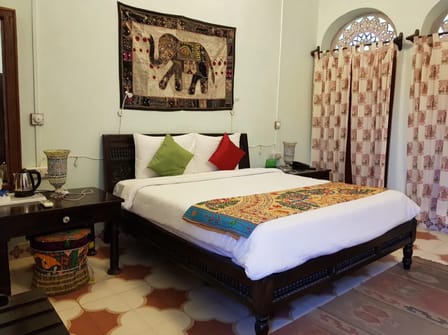
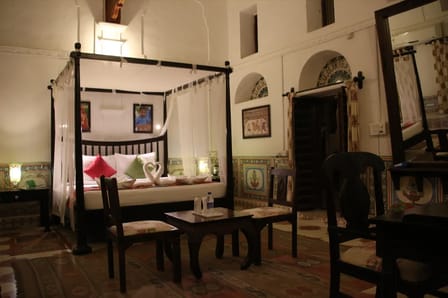
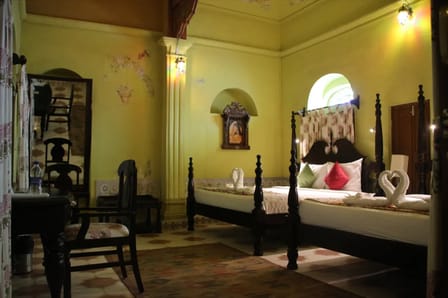
The restoration took twenty years, done by local artisans in lime plaster and mineral pigment, and its most telling decision is what it did not do: where original murals had not survived, the gaps were left rather than invented. Rooms come in two kinds. Heritage Rooms keep original murals on every wall and ceiling, rosewood four-posters and patterned stone floors; Haveli Rooms are quieter and larger, with courtyard balconies or direct lawn access and handmade king beds.
Where the murals were lost, they left the gaps.
Spice Court, the ground-floor restaurant, serves breakfast through dinner from a purely vegetarian kitchen run by the family, cooking Shekhawati food they describe as quieter than Rajputana cooking: less chilli, more restraint. The bar is carved wood over a chequered floor, pouring single malts and wine. The courtyard seats a hundred, and the whole house can be taken over by a single group of up to forty.
Churu, gateway to the painted towns
Churu is Shekhawati's under-visited end: roughly three hours from Jaipur, six from Delhi, with the railway station one kilometre from the gate. The house has been covered by National Geographic, Outlook Traveller, The Indian Express and The Hindu, and it makes the natural base for the painted havelis of the region before the crowds work it out.