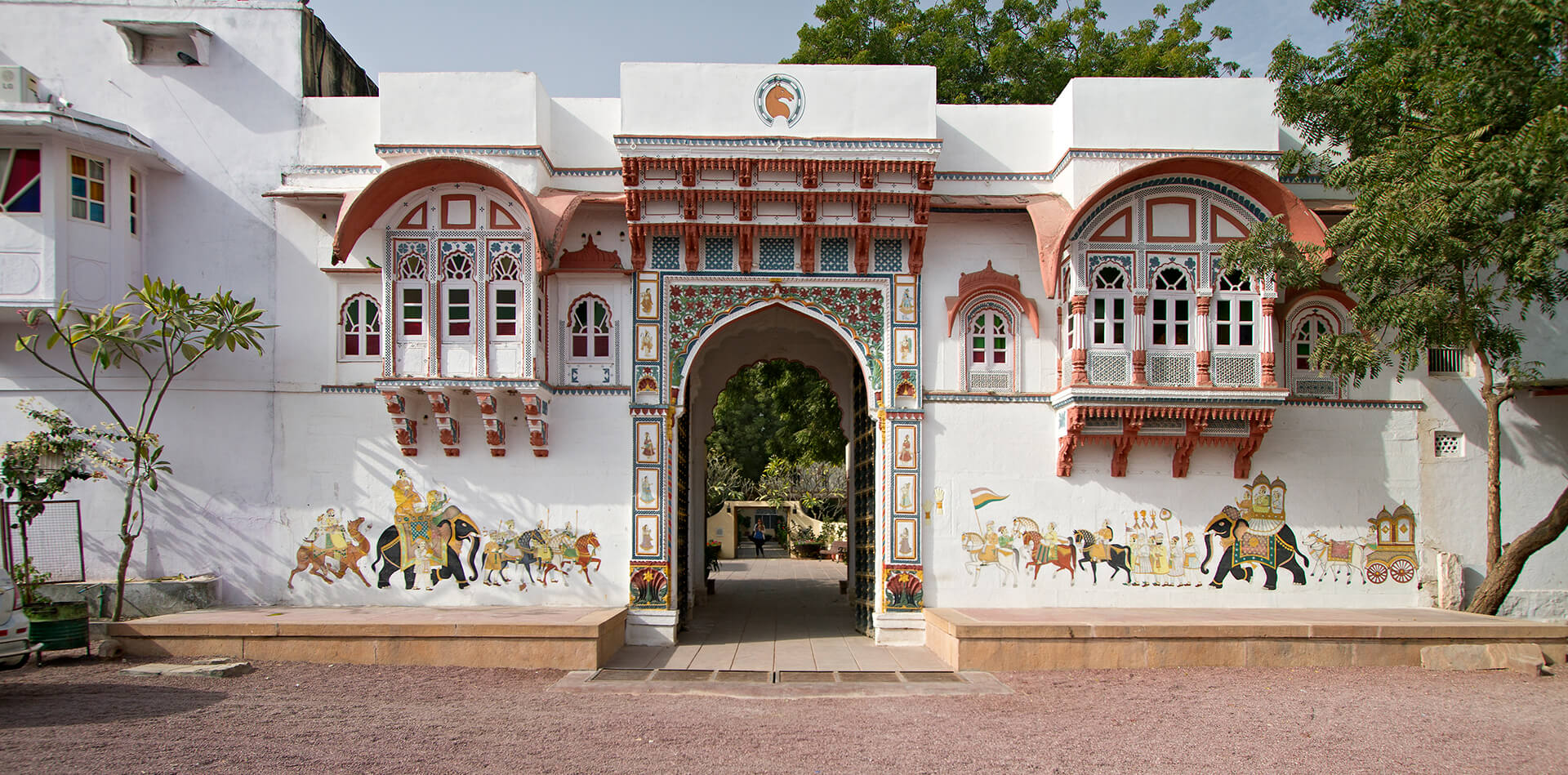
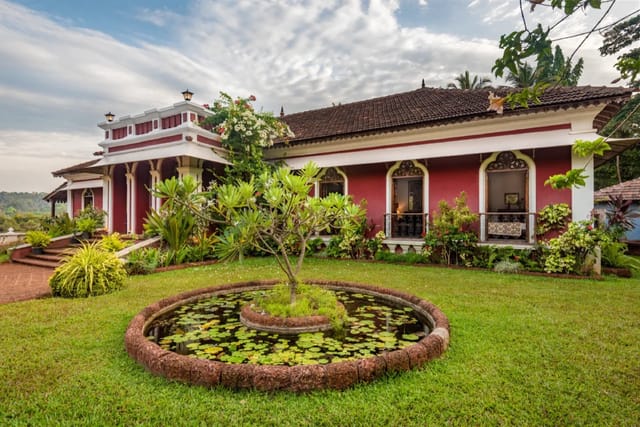
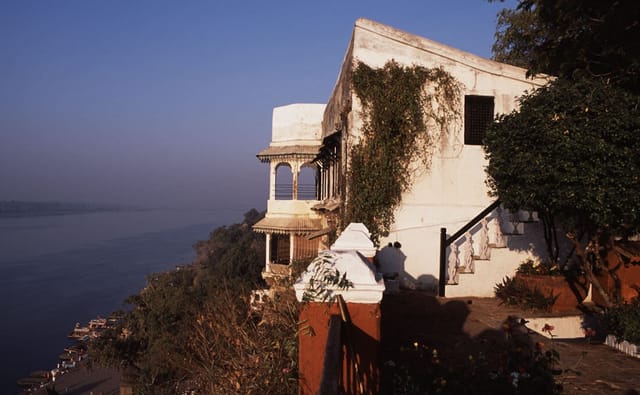
The Jagir of Rohet was granted in 1622 to Thakur Dalpat Singh I for bravery under the Rathore banner; legend counts 84 wounds and a grant of 84 villages from the Maharajah of Jodhpur-Marwar. Four centuries on, the same family lives here, and since 1990, when Thakur Manvendra Singh opened his ancestral home to guests, the house has set a high bar for what a family-run heritage stay can be. Nothing new has been built; the old edifices were simply redesigned.
A lake, a stable, a kitchen with its own cookbooks
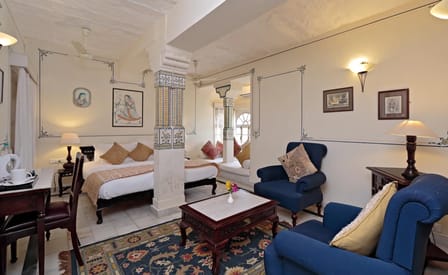
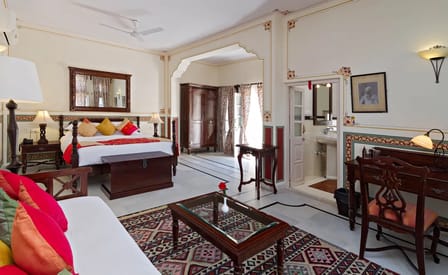
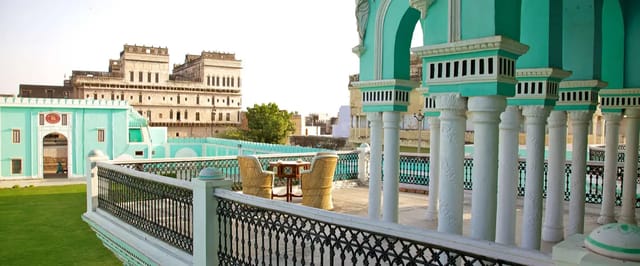
The house sits on the banks of a lake amid rural Marwar, lawns and gardens pulling in peacocks and, in a good winter, up to 200 bird species (the hotel runs escorted bicycle birding trips with a packed breakfast). Its rooms, some thirty of them including six suites, carry frescoes and furniture designed in-house, hand-painted walls and local textiles. The pool sits in an interior courtyard with a chhatri on each corner, and dinner is often served beside it with folk musicians.
The kitchen has literature: its chefs were trained by the late Thakurani Sahiba Jayendra Kumari, author of Cuisine of Rohet Garh, and culinary workshops are led today by her daughter-in-law with hands-on training. The stable is serious too, one of the finest Marwari horse yards in the country, schooled by the owner himself, with riding from hour-long outings to six-day safaris on English saddles.
Chatwin wrote The Songlines here; Dalrymple, City of Djinns.
Bruce Chatwin and William Dalrymple each lived at Rohet Garh for four to five months writing those books, which remains the best review a desert house ever received.
The original Village Safari
Rohet Garh pioneered the Village Safari in 1988, and it is still the thing to do: out to the Bishnois, protectors of the blackbuck for over 500 years, the Raika shepherds and the Paliwal and Meghwal craft communities. Shikar Dinners go by camel cart to a desert campsite with Manganiyar musicians and Terrah Taal dancers; Royal Picnics put mattresses, bolsters and crisp linen beside a waterbody. Jodhpur's airport and railway station are 42 km away, and during Gangaur the deities are displayed for five evenings in the Zenana court with Ghoomar dancing nightly.