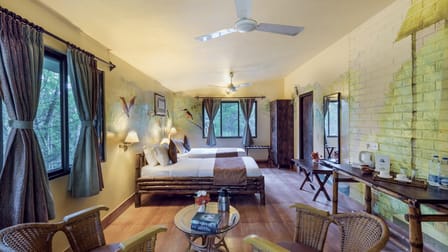
Every one of the 21 rooms at Sunderban Tiger Camp has been hand-painted by a local artist with scenes of the mangrove forest outside, and none of them has a television. That trade tells you what this camp is for. Set on Dayapur Island opposite Sunderban National Park, with the Pitchkhali River wrapped around it, the camp has been running since 2004 and describes itself as the trailblazer of Sundarbans tourism.
Arriving by boat, staying by the water
There is no driving to the door here. Guests take the road as far as Gadkhali, then the camp's arranged boat carries them across to the island. It is a fitting introduction to the largest mangrove forest, a UNESCO World Heritage Site and Biosphere Reserve that the camp's own pages call home of the swamp tigers. Rooms come in five categories, from AC Huts to Executive Cottages sited near the Datta River, and every one has a private balcony. Days are built around wildlife cruise safaris with the camp's local naturalists, bird watching, honey collection tours and nature walks, with the Sajnekhali, Dobanki and Sudhanyakhali watchtowers among the nearby lookouts over the forest.
Our rooms are intentionally devoid of televisions, offering an opportunity to wake up to the melodious chirping of birds.
Bengali suppers and the forest goddess
Meals happen at Fisherman's Wharf, a restaurant hung with local fishermen's tools, where Bengali, Indian, Chinese and Continental buffets run from breakfast through dinner and the vegetables, chicken, fish and crab are all sourced locally. Evenings bring a sundowner at the Mangrove bar while local adivasis perform tribal dances or stage the Bonobibi Jatra, the play that tells how every religion in the Sundarbans worships the forest goddess before entering the tiger forests. A library, a recreation room and The Tiger Shop's handcrafted mementos round it out. The camp suggests two to five days, and we would lean towards the longer end: the Sundarbans reveals itself slowly, by tide and by boat.