Ranthambhore Tiger Reserve runs to 1,530.23 square kilometres across the Sawai Madhopur, Karauli, Bundi and Tonk districts of Rajasthan, at the junction of the Aravalli and Vindhya ranges. Ranthambhore National Park sits inside it, and the two official figures for the park do not agree: the forest department's protected area register gives 282.03 square kilometres, while the reserve's own booking site says the park was notified over 274.50 square kilometres in 1980. The reserve came under Project Tiger in 1973 and was enlarged in 1992 to take in Keladevi Sanctuary to the north and Sawai Mansingh Sanctuary to the south. Safaris are made in ten numbered zones.
The ten zones
The reserve publishes what each zone covers and how far you drive in it. Zone 1 takes in Singhdwar, Raipur, Sultanpur and Kalapan over 20 km. Zone 2 runs Jogimahal, Jhalra, Kamaldha and Gandhria, also 20 km. Zone 3 is Jogimahal, Padam Talab and Rajbagh over 18 km. Zone 4 is the longest of the lake-side zones at 27 km, covering Lakarda, Berda and Adidant. Zone 5 covers Jokha, Kachida, Bagdah and Bakola over 18 km. Zone 6 runs Kundal, Mansarovar and Guda over 27 km. Zone 7 is the shortest at 12 km, Chidikho and Kushalidarra. Zone 8 covers Balas, Kalibhat and Mahakho over 16 km, Zone 9 covers Qualji, Ghati ka Tiraha and Pandu Kho over 22 km, and Zone 10 covers Halonda, Kailashpuri and Devpura over 20 km. The three lakes people come for, Padam Talab, Raj Bagh and Malik Talab, sit in the low-numbered zones.
The zone allocation, which is not a lottery
This is the thing visitors get told wrong most often. The reserve's own FAQ says you may choose your preferred zone on the booking portal. What it also says is that the reserve management can change your allocated zone, or close any zone, at any time in the interest of conservation. So the zone is picked by you and can be overridden by them. It is not drawn from a hat, and a lodge cannot fix it either.
Two vehicles go in. A Gypsy carries six visitors, a Canter carries twenty. A trained naturalist guide must ride in every vehicle, and the payment you make at booking already covers the guide and the Gypsy; asking for one named guide costs extra.
How the booking windows work
Advance permits open at 12:00 noon and run up to 90 days before the date of visit, and they are processed per seat rather than per vehicle. The reserve opens each quarter on a fixed day: visits between 1 October and 31 December go on sale from 1 August, visits between 1 January and 31 March from 1 November, and visits between 1 April and 30 June from 1 February.
After that there are three later releases. Tatkal opens at 11:00 seven days before the visit date, at a premium rate, and is sold as whole Gypsies only. Premium Tatkal opens three days out at 10:00 and again at 18:00, at a premium rate, and is sold as shared seats. Same-day booking exists only for afternoon drives, after 10:00; a morning drive has to be booked at least a day before.
What a safari costs
The reserve does not publish its tariff on a public page. Its own price section says only that the figure depends on the vehicle, your nationality, the zone, government fees and tax, and shows it to you inside the booking flow. We are not going to guess at it, and anybody quoting you a precise Ranthambhore permit figure off a web page is quoting something they have not sourced either.
What we can show you is our side. A private exclusive Gypsy arranged through one of our lodges here is charged to us at Rs 65,000 a vehicle before tax. That is a long way above a permit, and the difference is the lodge holding a seat allocation that sells out months ahead, its own vehicle rather than whatever is free at the gate, and a naturalist of its own riding alongside the forest guide the rules require.
The rules that catch people out
The original ID you uploaded when booking has to be the one you carry. A mismatch voids the permit at the gate. The same ID cannot be used in two different zones in the same shift, and the department bans IP addresses and mobile numbers it decides have been used to book improperly.
Mobile phones are not permitted inside the tourism zones of the core habitat.
When it is open, and getting there
Rajasthan Tourism and the reserve both give the season as October to June. The state's own permit portal also carries a separate Current Wildlife Permit booking for July, August and September, so something stays bookable through the monsoon even while the advance calendar does not run.
Sawai Madhopur railway station is effectively at the reserve, and the park is 14 km from the town. Jaipur International is the nearest airport at 166 km, Delhi is 352 km, Kota 145 km. Ranthambhore Fort stands on a 700-foot hill inside the park, is said to date to 944 AD, and is one of the six Hill Forts of Rajasthan that UNESCO inscribed in 2013.
Where we put you
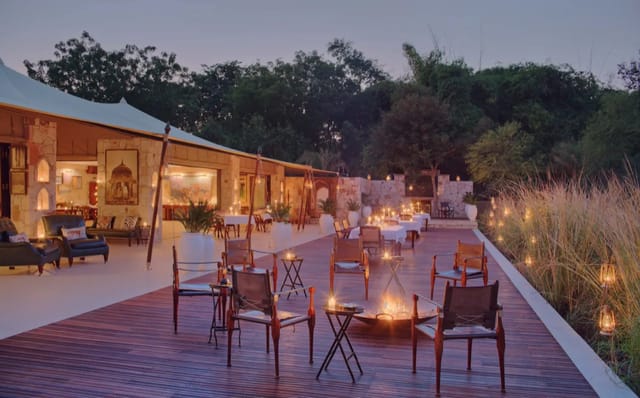
SUJÁN Sher Bagh keeps twelve campaign-style tents on the edge of the reserve, with brass bathtubs, campfire cooking and a jungle spa.
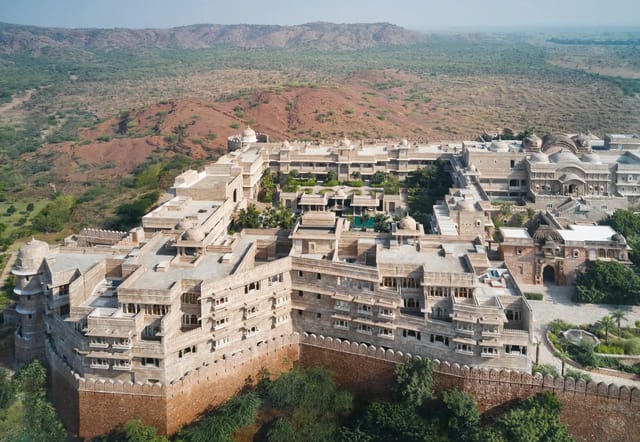
Six Senses Fort Barwara is a 14th-century walled fort restored over more than a decade into 48 Rajasthani suites, with two palaces, two temples and a 30,000 square foot spa inside the ramparts.
Khem Villas is a camp of eight cottages and seven tents on 30 acres of grassland at the park edge, land bought in 1989 and planted back into habitat.
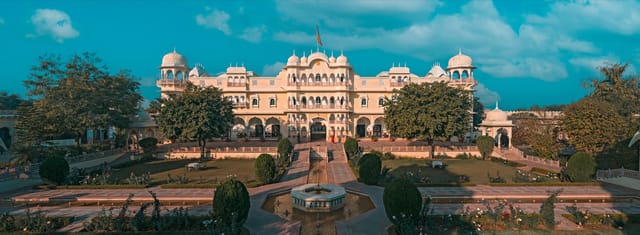
Nahargarh Ranthambhore is an ivory fortified palace of 99 rooms built by Alsisar Hotels, with three pools and a stepwell called Hathi Kund.
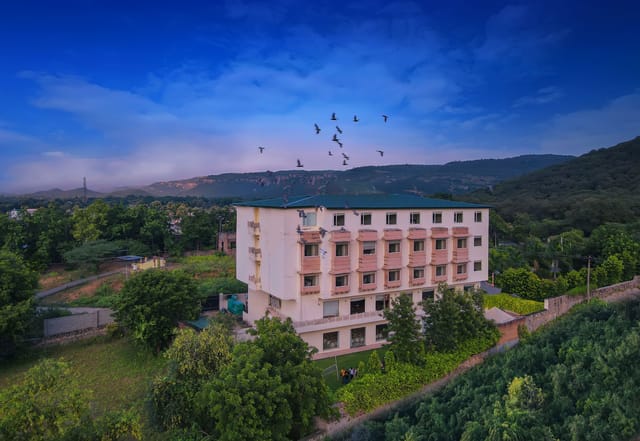
Mount Valley is the fifth we hold here.
Whichever you pick, the arrival day is a travelling day. Drives leave before the gate opens.