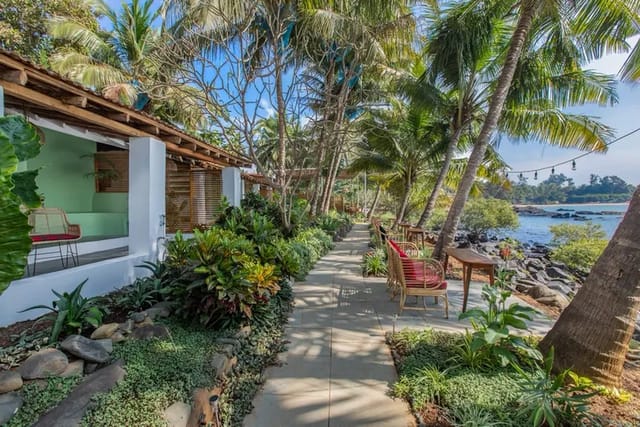
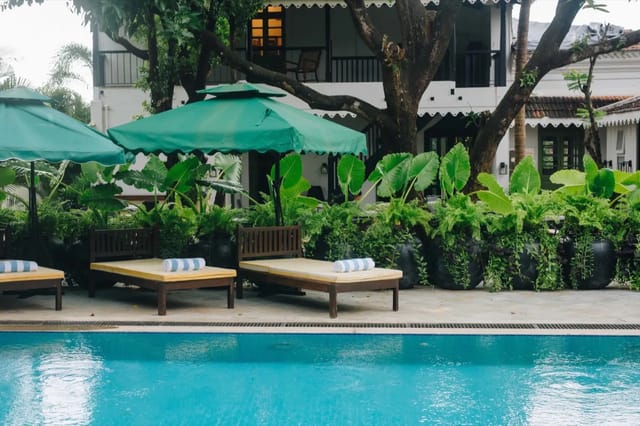
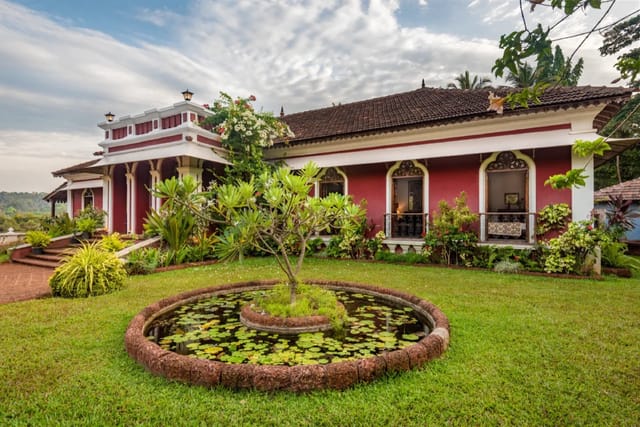
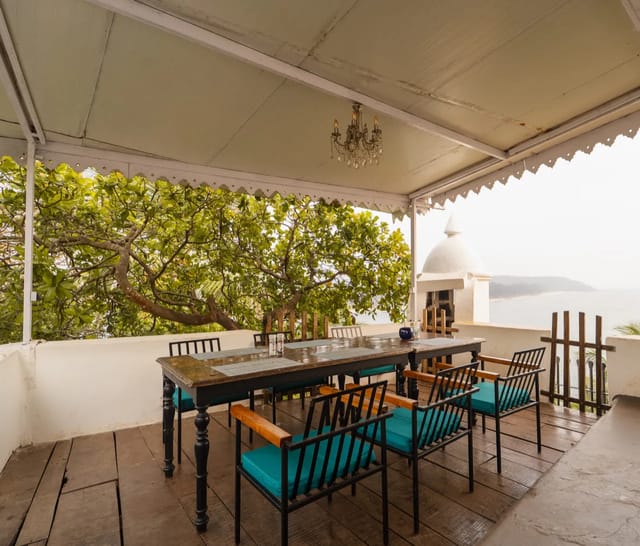
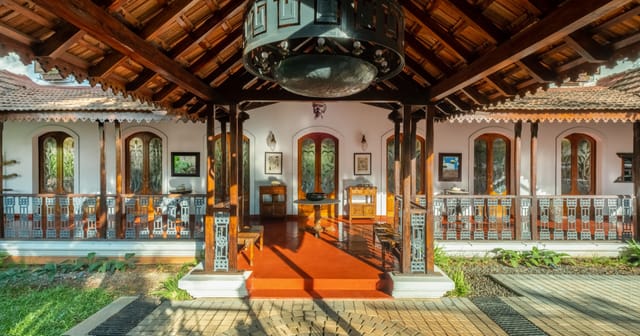
The Goa worth booking a house in is not the beach strip. Our eight stays here are mostly Portuguese-era village homes a few kilometres inland, where the lanes are green and the buildings are two or three hundred years old.
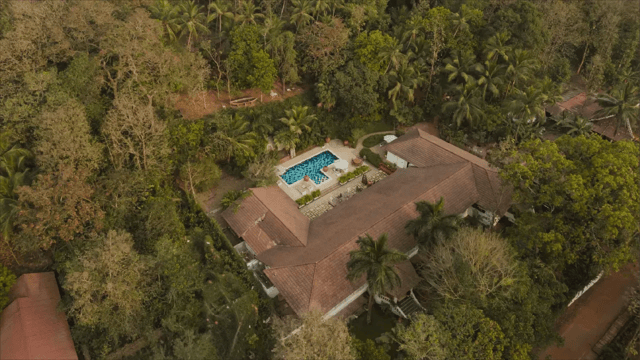
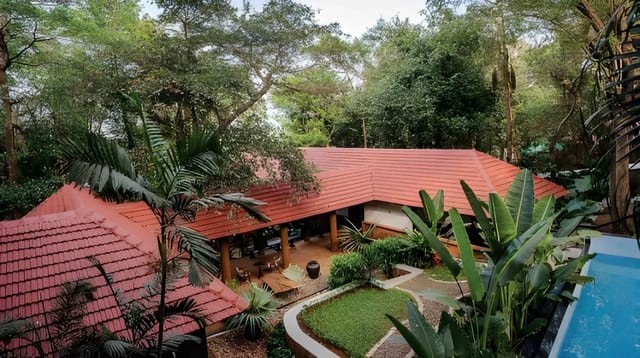
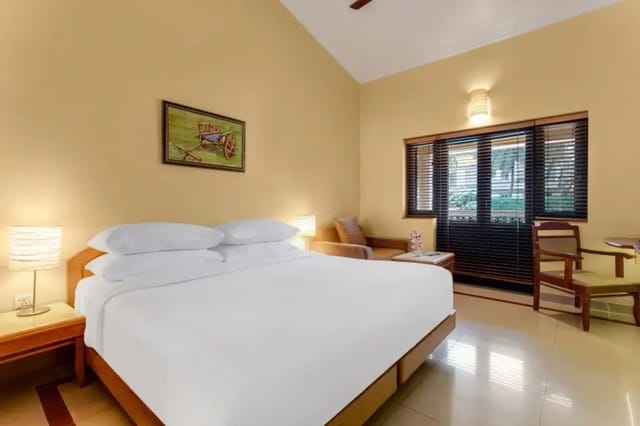
The Bardez villages north of Panjim are the heart of it. Brij Paraiso is a restored Indo-Portuguese garden villa in Saligao's quiet lanes. Seven Doors House has eight en-suite bedrooms in a 1932 Portuguese-Goan house restored over five years. The Project Café Goa in Aldona is run like a gallery and priced like one. These sit ten to twenty minutes from the beaches, which in Goa terms is nothing, and they are a different country in the evening.
Near the sand, Casa de Goa is Portuguese-Mediterranean architecture and courtyards a few minutes from Calangute, and Casa Jaali is on one of the quieter beaches. Convenient if the point of the trip is swimming and eating late.
The far north is where Goa runs out. Fort Tiracol is a four-hundred-year-old fort at the state's edge where the river meets the sea, reached by ferry, with only a handful of rooms.
South of Panjim the pace changes again. Amrapali House of Grace is a century-old Portuguese home on the Zuari, run as a house first and a hotel second. Brij Casa Susegad is a Portuguese villa wrapped in forest.
Goa's airport at Dabolim is about 30 km from Panjim, and the newer Mopa airport serves the north. Season matters more here than anywhere else on this list: November to February is dry and busy, the monsoon from June to September closes much of the beach shack economy but leaves the villages green and cheap.