Things to Do in Jaisalmer
Entry fees, opening times and fares in India change often. Please check before you travel.
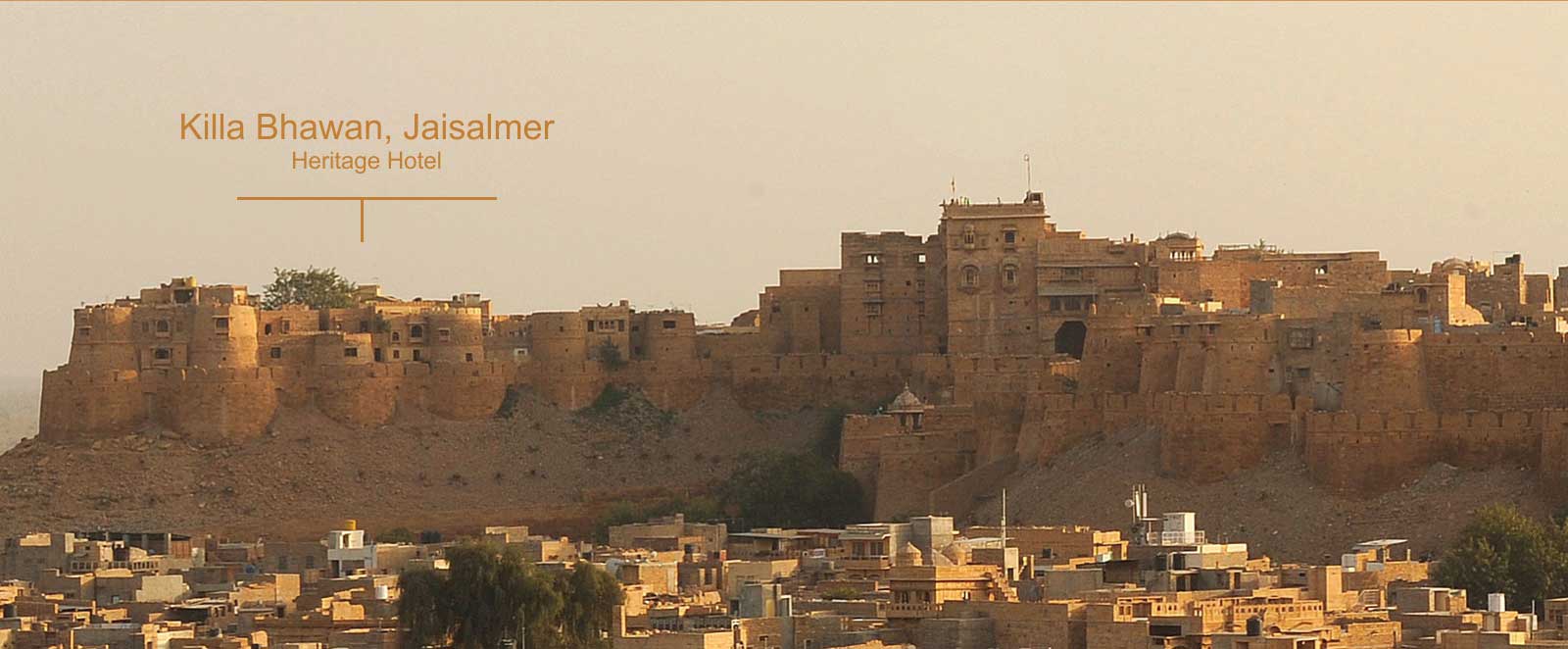
New Planning with ChatGPT or Gemini? Paste the plan and we'll price it with real hotels and a car. Price my itinerary Jaisalmer is the second of two stops on Jodhpur & Jaisalmer 4 nights · with Jodhpur · from ₹21,999 per person See it →Jaisalmer is a fort that is still a town. About a quarter of the old city's people live inside the walls, in lanes of carved sandstone that turn gold in the last hour of light, which is why the place is called the Golden City and why the first thing to do is simply to walk in. Below the fort the merchants' havelis of the nineteenth century are the second thing. The desert is the third, and it starts at the edge of town.
How the city is laid out
The fort sits on Trikuta hill in the middle of everything, ninety-nine bastions round its wall, entered through a chain of gates on the east side. The old town spreads below it to the north and east, with the big havelis, the market square and Gadisar Lake at its edge. The desert begins within a few kilometres in every direction; the dunes most people visit, at Sam, are about forty kilometres west, and Khuri is a quieter alternative to the south-west.
The airport is a few kilometres from town, with seasonal flights. Jodhpur is about five hours by road, Bikaner about six.
The sights
The fort
Built by Rawal Jaisal in 1156, and lived in ever since. Walk up through the four gates to the main square, then lose yourself: the Raj Mahal palace and its museum, the seven Jain temples of the fifteenth and sixteenth centuries with their carved yellow stone, the lanes of houses, the rooftops looking out to the Thar. Go early, and again at the end of the day. Note that the fort is fragile; water use inside it is the reason many hotels now sit outside the walls.
Patwon ki Haveli
The largest of the merchant mansions, five havelis in a row built by the Patwa family in the first half of the nineteenth century, their facades carved like lace. One is a museum; the lane in front is the most photographed street in town.
Salim Singh ki Haveli and Nathmal ki Haveli
Two more, smaller and stranger. Salim Singh's has a top storey that flares out like a peacock's tail; Nathmal's was carved by two brothers working from opposite ends, and the two halves do not quite match.
Gadisar Lake
The rain-fed reservoir that kept the city alive, ringed with small temples and chhatris, with a gateway from the nineteenth century at its entrance. Early morning for the birds; evening for the light on the fort behind.
Bada Bagh
The royal cenotaphs on a rise six kilometres north, sandstone pavilions over the cremation sites of the Bhatti rulers. Best at sunset, with the wind farm on the horizon reminding you what century it is.
Kuldhara
The abandoned village twenty kilometres west, said to have been emptied overnight in the nineteenth century, its houses still standing roofless in rows. Half an hour on the way to the dunes.
The desert
Sam sand dunes
The dunes forty kilometres west, where the camel rides and the sunset crowds go. It is busy; the point is to be on a camel as the sun goes down and then eat under the stars at a camp. If you want the same thing without the crowds, go to Khuri instead.
A night in a camp
The way to do the desert is to sleep in it. Camps range from a tent on the sand to the palace of canvas that SUJÁN runs. Dinner around a fire, folk musicians, a sky with no light beneath it, and a camel walk at dawn.
The Desert National Park
South-west of the city, some three thousand square kilometres of dunes, scrub and fossil beds, and the last stronghold of the great Indian bustard. A day with a driver and a permit for the serious.
What to eat
Ker sangri, the desert bean and berry dish, is the local staple. Dal baati churma in a haveli courtyard. The sweet ghotua ladoo from the old-town shops. Rooftop dinners with the fort lit gold above you are the evening; every hotel below the walls has one.
How many days
| Days | What fits |
|---|---|
| 1 | The fort in the morning, the havelis after lunch, Gadisar at sunset |
| 2 | Bada Bagh and Kuldhara on the way to the dunes, a camel at sunset, a night in a camp |
| 3 | Back to town for the lanes you missed, or the Desert National Park |
Our journeys give Jaisalmer two nights, one in town and the possibility of one in the desert, and that is the right shape.
When to go
October to March, and November to February for the dunes, when the nights are cold enough for a fire to matter. The Desert Festival falls in February. April to June is punishing; the desert is at its emptiest and its hottest.
Where to stay
We hold six stays in and around Jaisalmer, inside the fort, below it, and in the desert.
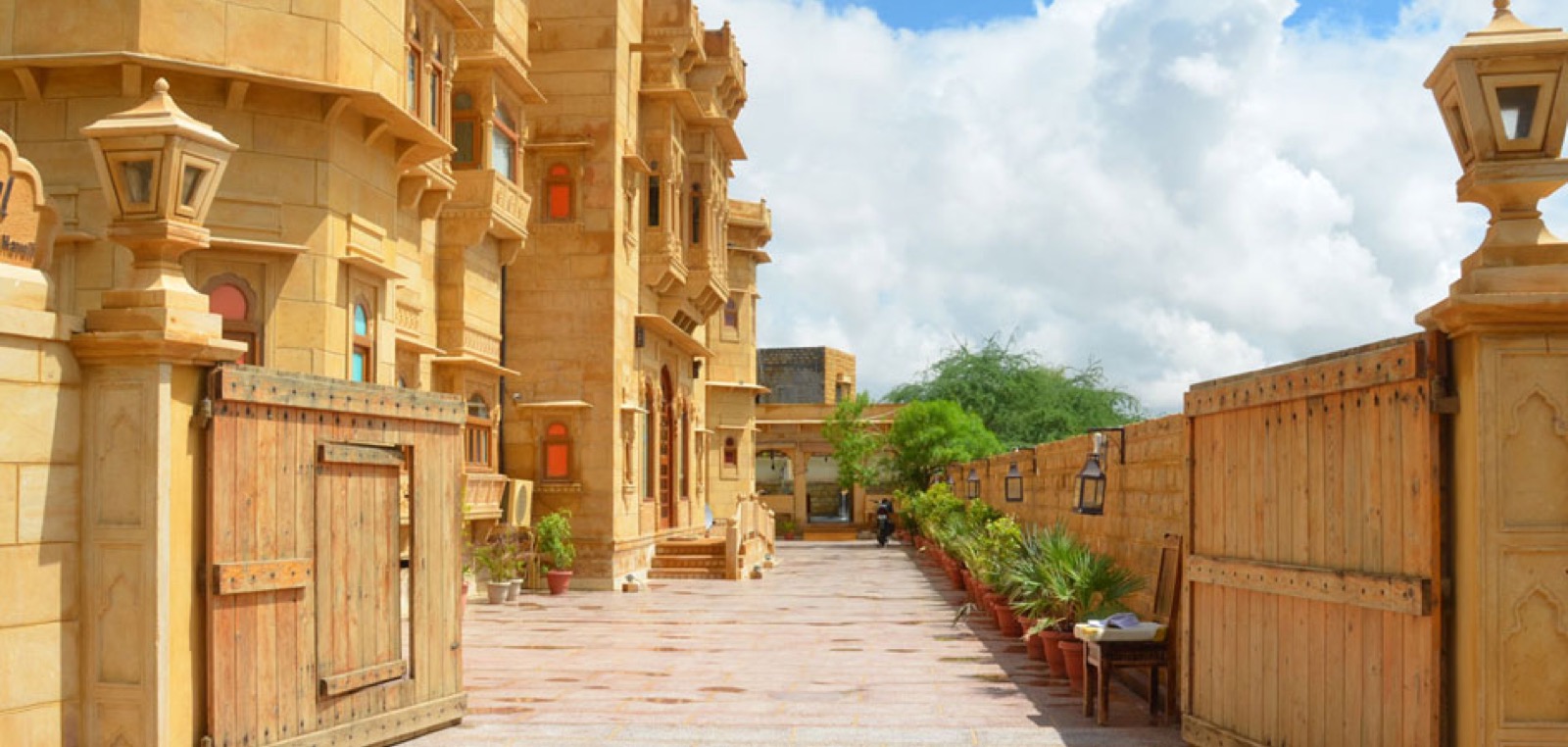
Inside the fort. Killa Bhawan, eight rooms built into the bastions. Garh Jaisal Haveli, a haveli at Kotari Para with a rooftop over the ramparts and out to the Thar.
Below the walls. Gulaal, a sandstone haveli built the traditional way around two open courtyards. Himmatgarh Palace, golden sandstone with tower rooms, a garden pool and views across to the fort. Jaisalmer Resort, a pool and lawns a short walk from the fort, with camp connections into the Thar.
In the desert. SUJÁN The Serai, a palace of canvas in the Thar.
All six, with what each is like.
Journeys through Jaisalmer
- Jodhpur & Jaisalmer, four nights, the blue city then the golden one
- Jaipur, Jodhpur & Jaisalmer, six nights, our pick
- The Rajasthan Grand Journey, ten nights
Or find a journey, weekend or city guide in three taps.
Should I stay inside the fort or outside it?
Inside is the experience: the lanes at your door, the walls at dusk. It is also the reason the fort is under strain, and rooms are small. Outside, the havelis and hotels below the walls look up at it, and most people find that the better view. One night each is the answer if you have two.
How many days do you need in Jaisalmer?
Two nights. One for the fort and the havelis, one in the desert. A third only if you want the National Park or a slower pace.
Is Jaisalmer worth the distance?
It is the furthest of the big Rajasthan cities from anywhere, five hours beyond Jodhpur. It is also the one that feels least like the others: smaller, older, on the edge of the country. Yes.
Sam or Khuri for the dunes?
Sam has the bigger dunes and the crowds; Khuri is smaller, quieter and forty minutes further. For a sunset with a hundred other camels, Sam. For a night in a camp with the sky to yourself, Khuri, or one of the private camps away from both.