Things to Do in Udaipur
Entry fees, opening times and fares in India change often. Please check before you travel.
New Planning with ChatGPT or Gemini? Paste the plan and we'll price it with real hotels and a car. Price my itinerary Udaipur is the second of two stops on Jaipur & Udaipur 4 nights · with Jaipur · from ₹21,999 per person See it →Udaipur is a city of lakes in a bowl of hills, and the thing to do is mostly to sit still and look at it. The City Palace runs along the east shore of Lake Pichola, the old town climbs behind it, and across the water the hills of the Aravalli close the view. Two full days is right. The first for the palace and the lake, the second for the old town's temples and havelis and a drive into the hills, and every evening for a rooftop with the sun going down behind the Monsoon Palace.
How the city is laid out
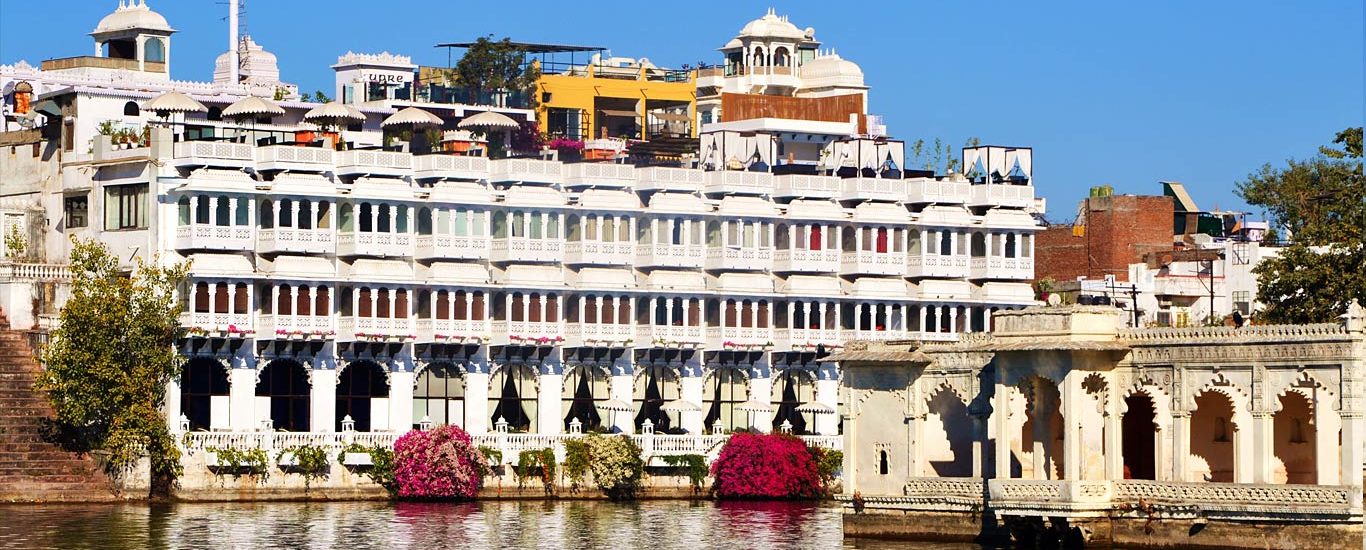
Lake Pichola is the centre of everything. The City Palace and the old town's ghats and temples sit on its eastern shore, with the lanes of the old city climbing the slope behind. The Lake Palace and Jag Mandir sit on islands in the water. Across the lake, the west shore around Ambrai and Hanuman Ghat has the quieter havelis and the best view back at the palace. North of the old town, Fateh Sagar is the second lake, with a promenade and the road out to Sajjangarh. The hills around hold the hotels that trade the lake for a view of it.
The airport is about twenty-two kilometres east. Jaipur is roughly six to seven hours by road, Jodhpur five to six, Kumbhalgarh and Ranakpur two to three, Mount Abu three.
The sights
City Palace
The largest palace complex in Rajasthan, begun by Udai Singh II in 1559 and added to by twenty-two rulers after him. Give it a full morning: the courtyards, the peacock mosaics, the mirrored halls, the balconies over the lake, and the museum. The crowds build; go at opening.
The lake by boat
A boat from the palace jetty circles Jag Mandir and passes the Lake Palace, and it is the way to see the city as it was built to be seen, from the water. The late-afternoon boat gets the palace lit gold; the sunset boat gets the sky.
Jagdish Temple
The 1651 Vishnu temple a few hundred metres from the palace gate, carved top to bottom, with the aarti in the evening. The lanes around it are the old city at its densest.
Bagore ki Haveli
An eighteenth-century haveli on Gangaur Ghat, restored as a museum of Mewar life, with the Dharohar folk dance in the courtyard every evening. Book the dance; it is the best hour of performance in Rajasthan for the money.
Sajjangarh, the Monsoon Palace
The hilltop palace west of the city, built in the 1880s to watch the monsoon clouds come in. It is the sunset spot: the lakes and the whole city below, and the palace itself is mostly empty. The road up passes through a small wildlife sanctuary.
Saheliyon ki Bari
The garden of the maids of honour, laid out in the eighteenth century with fountains, lotus pools and marble elephants. An hour in the cool of the morning.
Fateh Sagar and the promenade
The second lake, with an evening walk along the embankment and boats to the garden island of Nehru Park. Where the city itself goes in the evening.
Shilpgram
The crafts village ten kilometres west, with artisans from the region working and selling. Best during the December fair.
Beyond the city
Kumbhalgarh
Ninety kilometres north, a fifteenth-century fort with a wall some thirty-six kilometres long, often called the longest after China's. A full day, or a night in the hills nearby.
Ranakpur
The fifteenth-century Jain temple in a forested valley, ninety kilometres north-west, with 1,444 carved marble pillars, no two the same. Often combined with Kumbhalgarh in one long day, or with a stop on the road to Jodhpur.
Eklingji and Nagda
Twenty-two kilometres north, the Mewar dynasty's own Shiva temple, still in use, and the ruined tenth-century temples of Nagda beside a lake. Half a day.
The Aravalli villages
The hills around the city hold tribal villages, small lakes and the last leopards in the region. A day with a driver who knows the tracks, or a night at one of the hill retreats below.
What to eat
Dal baati churma is the Mewar dish, and the thali in an old-city haveli is the way to have it. Gatte ki sabzi, ker sangri, and the sweet ghevar. The rooftops on the west shore do a slow dinner with the palace lit across the water; the ones on the east do breakfast with the lake at your elbow.
How many days
| Days | What fits |
|---|---|
| 1 | City Palace in the morning, Jagdish Temple, a boat in the late afternoon, a rooftop for sunset |
| 2 | Add Bagore ki Haveli and the dance, Saheliyon ki Bari, Sajjangarh at sunset |
| 3 | Kumbhalgarh and Ranakpur as one long day, or Eklingji and the villages |
Two nights is what our journeys give Udaipur, and it is enough for the city. A third night is best spent in the hills.
When to go
October to March. Udaipur is a little cooler and a little greener than the desert cities, and the lakes are full after the monsoon, which is when the city looks the way the postcards do. April to June is hot; July to September brings the rain the Monsoon Palace was built for, and the lakes fill.
Where to stay
We hold eighteen stays in and around Udaipur, and they divide by where you want the lake to be.
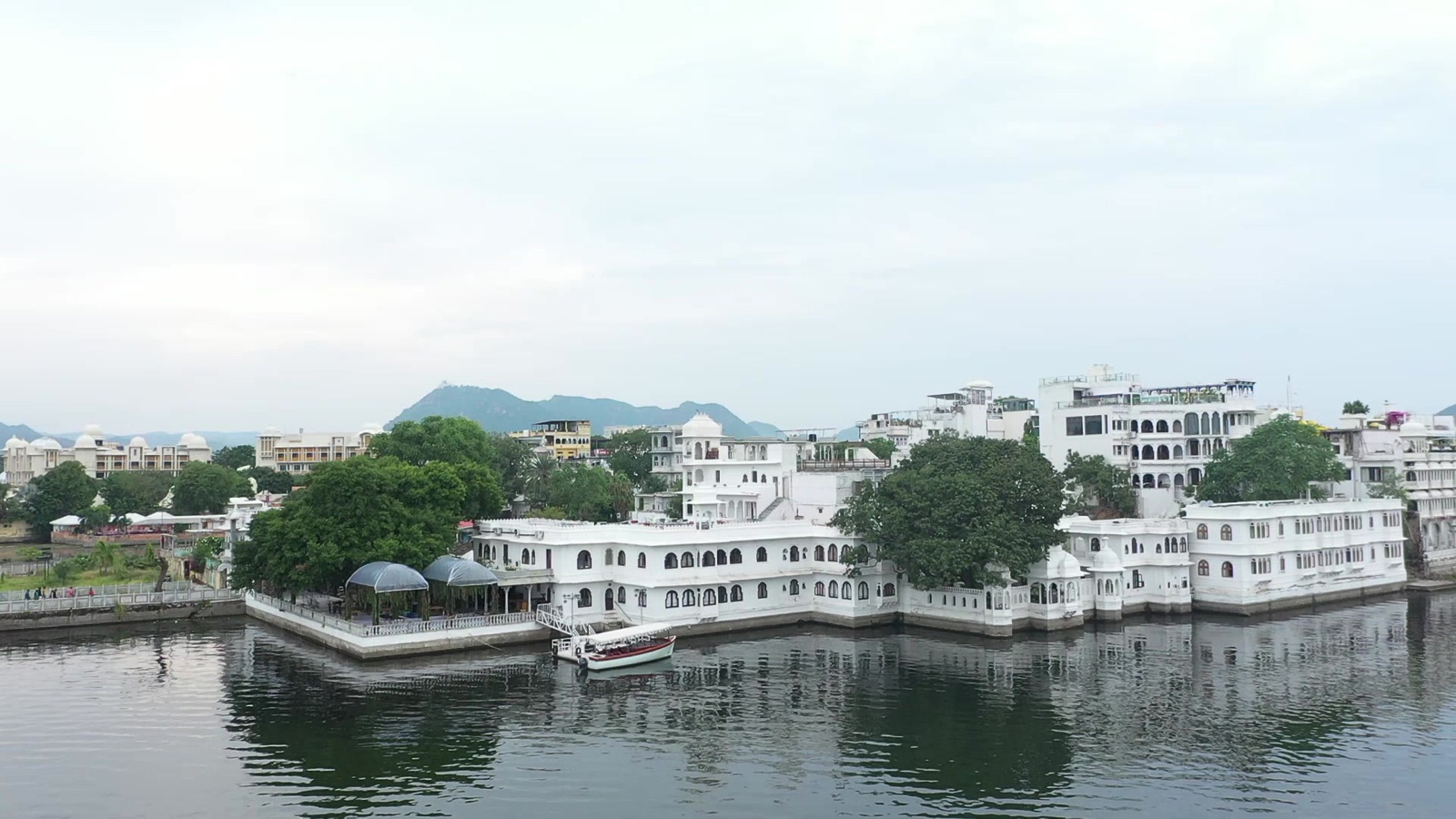
On the water. Amet Haveli, twenty-two lake-facing rooms in a haveli built between 1734 and 1752, with the Ambrai restaurant on the water. Lake Pichola Hotel, an 18th-century noble haveli facing the City Palace. Jagat Niwas Palace, a 27-key haveli on the ghats. Shiv Niwas Palace, thirty-six rooms in a crescent-shaped palace of the early 1900s, built in the reign of Maharana Fateh Singh. Rampratap Palace, on Fateh Sagar Lake.
In the old city. Udai Kothi, the rooftop where the evenings are the point. Hotel Mahendra Prakash, a family-run haveli with a fountain courtyard and a garden pool. Fateh Niwas, with a lake-view rooftop. Boheda Palace, a haveli on Lake Palace Road. Chunda Palace, a hand-painted palace hotel 270 metres from the lake, and Chunda Haveli with a rooftop pool six minutes away. Vasant Vilas, a small heritage hotel in Mali Colony.
In the hills, looking down. Fateh Garh, a hilltop palace rebuilt stone by stone above the city, and Fateh Vilas beside it with plunge-pool suites. Khas Mahal, all-suite, with heated private plunge pools. Premkunj, a boutique homestay in the hills ten minutes' walk from the lake. Chunda Shikar Oudi, eight lake-view suites on a 150-hectare private reserve. Shikarbadi, the Mewar royal family's former hunting lodge on a 250-acre estate.
All eighteen, with what each is like.
Journeys through Udaipur
- Jaipur & Udaipur, four nights, two royal cities
- The Rajasthan Grand Journey, ten nights, the full loop
- Golden Triangle, Pushkar, Udaipur & Goa, the long way south
Or find a journey, weekend or city guide in three taps.
How many days do you need in Udaipur?
Two full days for the city. Add a third for Kumbhalgarh and Ranakpur, which are a long day out and back, or better, a night on the way to Jodhpur.
Which side of the lake should I stay on?
The east shore, by the City Palace, puts you in the old city with the temples and the ghats at your door. The west shore, around Ambrai and Hanuman Ghat, is quieter and has the view of the palace across the water. For a first visit, either; for the evenings, the west.
Is Udaipur worth visiting in the monsoon?
Yes, if you can take the humidity. The lakes fill, the hills go green, and the Monsoon Palace does what it was built for. Prices are lower. The dry months from October are still the safer choice for a first trip.
Can I visit the Lake Palace?
It is a hotel, and only guests and diners with a reservation are taken across. The boat from the City Palace jetty passes close to it, which is how most people see it.